




<!-- Google AdSense AMP snippet added by Site Kit -->
<amp-auto-ads type="adsense" data-ad-client="ca-pub-4914531071721459"></amp-auto-ads>
<!-- End Google AdSense AMP snippet added by Site Kit -->
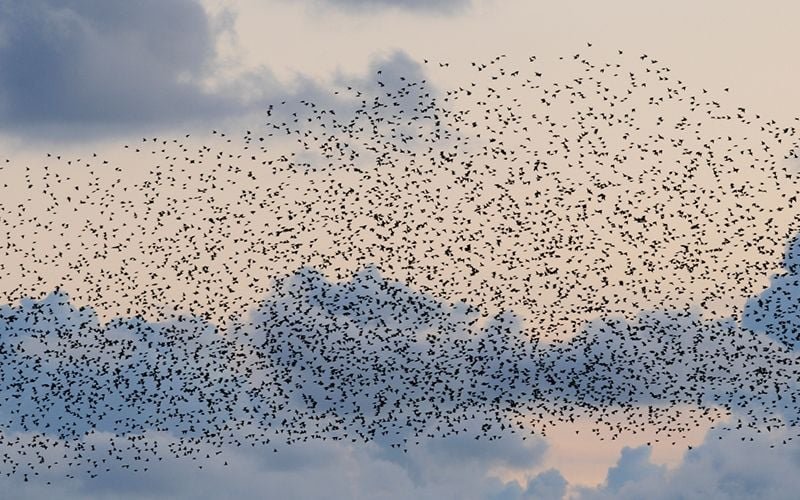
<p><strong>Irish News</strong> stories rarely get more visually captivating than this: a viral video from County Galway shows thousands of starlings moving across the evening sky in a breathtaking murmuration. Recorded near Lackagh church, the footage turned a chance sighting into a widely shared moment, reminding viewers why these synchronized bird displays continue to fascinate scientists, birdwatchers, and casual onlookers alike.</p>
<p>The clip was uploaded to Facebook on January 19, 2014, by Donna Naughton Kemp, who said she came across the spectacle while driving home after visiting someone in hospital. In comments later reported by the Irish Mirror, she described spotting the birds and being transfixed by the scene overhead. It is easy to see why the video resonated: the flock appears to pour through the sky like smoke, shifting shape in seconds as the birds wheel, dip, and tighten into fluid patterns.</p>
<h2>Irish News spotlight on the Galway murmuration</h2>
<p>The Galway recording was made behind Lackagh church and quickly gained attention online because it captured the scale and beauty of a classic starling murmuration. These events happen when large flocks gather and move in highly coordinated formations, often just before nightfall as they prepare to settle at a roost.</p>
<p>Although the sight looks almost choreographed, murmurations are not fully understood. Experts have long studied why starlings create these dramatic airborne shapes, but there is still debate about what drives the behavior. What is clear is that the movement is both highly responsive and collective, with each bird adjusting in real time to those around it.</p>
<h3>Why starlings move this way</h3>
<p>Several explanations are commonly linked to murmuration behavior:</p>
<ul>
<li><strong>Protection from predators:</strong> Large flocks can reduce the risk to any one bird, especially when hawks or falcons are nearby.</li>
<li><strong>Safety in numbers:</strong> Birds near the center of the flock are thought to be less exposed than those at the edges.</li>
<li><strong>Roosting behavior:</strong> These gatherings typically occur near dusk, when starlings are choosing a place to rest for the night.</li>
<li><strong>Instant group reaction:</strong> Each bird mirrors changes in speed and direction from nearby birds, creating rippling patterns across the flock.</li>
</ul>
<p>One widely cited explanation, described in past reporting by Daniel Butler in the Daily Telegraph, suggests that each starling tries to stay close to its neighbors while quickly copying their movements. That simple rule can produce the extraordinary waves, loops, and rolling shapes seen in the sky.</p>
<h2>What scientists and bird experts say about murmurations</h2>
<p>For all their beauty, murmurations are often framed as a survival strategy. Starlings are vulnerable to birds of prey including peregrines, merlins, and sparrowhawks. A dense, fast-moving flock makes it harder for a predator to isolate a target, especially when the edges of the group are constantly shifting.</p>
<p>Still, bird organizations have noted that no single explanation fully solves the mystery. BirdWatch Ireland, which shared another well-known Irish murmuration video from County Wexford in 2013, described the phenomenon as one of nature’s most amazing spectacles and acknowledged that its exact purpose remains uncertain.</p>
<p>That combination of science and mystery is part of what keeps these videos circulating years after they are first posted. In the Galway footage, the flock’s motion feels almost impossible, as though the birds are operating with a single shared instinct.</p>
<h2>Other viral murmuration moments in Ireland</h2>
<p>This Galway video is not the only example to capture public attention. Ireland has produced several memorable murmuration recordings over the years, adding to the country’s growing archive of remarkable wildlife moments.</p>
<ol>
<li><strong>2011, River Shannon:</strong> Two tourists canoeing toward a small island were stunned by a large starling display overhead.</li>
<li><strong>2013, County Wexford:</strong> BirdWatch Ireland recorded another viral murmuration that drew attention online.</li>
<li><strong>2014, County Galway:</strong> The Lackagh church footage became one of the best-known Irish examples of the phenomenon.</li>
</ol>
<p>For readers following <strong>Irish News</strong> and nature stories, these clips offer more than viral entertainment. They document how often extraordinary wildlife events appear in ordinary places, from river routes to rural church grounds.</p>
<h2>When and where you are most likely to see a murmuration</h2>
<p>If you hope to witness a starling murmuration in Ireland, timing matters. These formations are most commonly seen in the late afternoon or at dusk, especially in cooler months when birds gather before roosting. Open countryside, reed beds, wetlands, and quiet rural areas can all become temporary stages for the display.</p>
<p>Look for these signs:</p>
<ul>
<li>Large numbers of starlings gathering in one area</li>
<li>Increased bird activity shortly before dark</li>
<li>Repeated circling and tightening flock patterns</li>
<li>Roost sites near trees, marshes, or sheltered open land</li>
</ul>
<p>Even then, no two murmurations are exactly alike. Some last only minutes, while others build gradually into a sweeping aerial performance.</p>
<h2>Why this Galway video still matters</h2>
<p>The lasting appeal of the Galway clip lies in its spontaneity. There was no staged setup, no special event, and no guarantee the birds would perform at all. A routine drive home became a front-row seat to one of the most striking natural phenomena seen in the Irish sky.</p>
<p>For anyone interested in wildlife, viral videos, or regional culture, this is the kind of story that defines memorable <strong>Irish News</strong>. It captures a local moment with universal appeal: thousands of birds moving as one, just before dark, leaving viewers with more questions than answers.</p>
<p>Whatever the exact science behind a murmuration, the effect is undeniable. The Galway footage remains a vivid reminder that some of the most extraordinary sights in <strong>Irish News</strong> happen when nature takes over the evening sky.</p>

Irish News: Galway Starling Murmuration Video Captures One of Nature’s Most Mesmerizing Displays


- Advertisement -