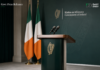
Ireland EU Presidency priorities moved into sharper focus in Brussels as Minister Helen McEntee addressed key European Parliament committees on foreign affairs, trade, and security. In a significant gov.ie-linked development from the Department of Foreign Affairs, the Minister set out how Ireland intends to use its Presidency to push practical outcomes on Ukraine, European resilience, trade policy, and defence cooperation.
Speaking during her 14 July 2026 visit, McEntee appeared before the Committee on Foreign Affairs, the Committee on International Trade, and the Committee on Security and Defence. The visit underlined the central role of the European Parliament as a co-legislator and a crucial partner in delivering Ireland’s six-month programme.
Ireland EU Presidency priorities laid out in Brussels
Before MEPs, the Minister connected several strands of Ireland’s EU agenda that span Foreign Affairs, Defence, and Trade. Her message was that in today’s geopolitical environment, these policy areas are no longer separate silos. Instead, they are tightly linked to European stability, competitiveness, and strategic autonomy.
Key Ireland EU Presidency priorities outlined included:
- Maintaining and strengthening EU support for Ukraine
- Advancing further sanctions against Russia
- Supporting Ukraine’s long-term path toward EU accession
- Encouraging dialogue in the Middle East, especially between Israel and Palestine
- Backing peace and security efforts in Lebanon, Syria, and the Gulf
The presentation reflects broader work across the Department of the Taoiseach, Foreign Affairs, Defence, and Justice as Ireland positions itself at the centre of major EU policy debates.
Trade agenda focuses on open markets and EU competitiveness
At the Committee on International Trade, McEntee said Ireland would support an open, rules-based trade agenda. That includes efforts to move negotiations forward with Malaysia, the Philippines, Thailand, and the United Arab Emirates, while also upholding the Joint EU-US Statement on Tariffs.
She also stressed that stronger EU competitiveness is essential if Europe wants a more independent trade policy. Sectors such as life sciences were highlighted as strategically important, with clear relevance for Finance, Enterprise, Trade and Employment, IDA Ireland, and Enterprise Ireland.
For businesses and policymakers alike, the trade dimension of the Ireland EU Presidency priorities could influence future market access, supply chains, and regulatory cooperation across Europe and beyond.
Security and defence priorities centre on resilience
On security and defence, the Minister outlined a detailed programme aimed at strengthening Europe’s capacity to respond to a more volatile global environment. She pointed to continued support for Ukraine, progress on the Military Mobility package, and stronger defence industrial capacity through initiatives including AGILE and the European Competitiveness Fund.
Other priorities include:
- Enhancing maritime security
- Progressing EU Common Security and Defence Policy missions
- Supporting work toward a new EU mission in Lebanon
- Boosting preparedness against cyber, hybrid, and infrastructure threats
- Deepening cooperation with partners such as NATO and the UN
These themes overlap with the interests of bodies such as the National Cyber Security Centre (NCSC), An Garda Síochána, the Office of Public Works (OPW), and the Data Protection Commission (DPC), particularly where resilience and critical systems are concerned.
Why this matters for Ireland and the EU
The Ireland EU Presidency priorities matter because they show how Dublin plans to influence decision-making at a critical time for Europe. From war in Ukraine to Middle East diplomacy, from trade negotiations to cyber resilience, Ireland is signalling that its Presidency will focus on achievable outcomes rather than symbolism.
McEntee said the discussions with MEPs helped identify where cooperation with Parliament can deliver the greatest progress. That collaborative approach will be essential as Ireland works with EU institutions over the coming months.
Quick FAQs
What did Minister McEntee present?
She presented Ireland’s EU Presidency priorities on foreign affairs, international trade, and security and defence to three European Parliament committees.
What are the main foreign policy goals?
Support for Ukraine, further sanctions on Russia, and diplomatic engagement in the Middle East, Lebanon, Syria, and the Gulf.
What is the trade focus?
A rules-based trade policy, advancing talks with Asian and Gulf partners, and strengthening EU competitiveness.
What is the defence focus?
Military mobility, defence industrial capacity, maritime security, CSDP missions, and resilience against cyber and hybrid threats.
In short, the Ireland EU Presidency priorities presented in Brussels set the tone for a Presidency built around security, diplomacy, and economic resilience. For readers tracking gov.ie developments and EU affairs, this is one of the clearest signals yet of how Ireland plans to shape the European agenda in the months ahead.
Article/Image Courtesy: gov.ie