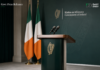
The latest gov.ie update confirms that Taoiseach Micheál Martin is meeting German Chancellor Friedrich Merz in Dublin on 28 July 2026, in a high-level engagement focused on major European priorities. The talks come at a significant moment for Ireland’s EU Presidency, with both leaders expected to address the bloc’s long-term direction on finance, growth, trade and enlargement.
According to the Department of the Taoiseach, the meeting will centre on some of the most pressing files on the European agenda. These include the EU’s next long-term budget, Europe’s competitiveness, and the future expansion of the Union. The visit also carries a strong political and symbolic dimension, as the Taoiseach is expected to express Ireland’s solidarity with the victims of the recent attack on the Pride parade in Berlin.
gov.ie meeting puts EU priorities at the centre
This gov.ie announcement highlights how central Germany remains to Ireland’s diplomatic and economic engagement within Europe. As one of the EU’s largest economies, Germany’s stance on budget negotiations, industrial policy and enlargement will be crucial in shaping outcomes during Ireland’s Presidency.
The Taoiseach indicated that discussions with Chancellor Merz will focus on:
- The EU’s next multiannual long-term budget
- Measures to improve European competitiveness
- Deepening the single market and widening trading links
- Addressing energy costs across member states
- Preparing for climate and digital transitions
- Progress on EU enlargement
These priorities align with wider government coordination across Finance, Enterprise, Trade and Employment, Climate Action, and Transport, while economic and statistical inputs often involve agencies and bodies such as the Central Bank, CSO, IDA Ireland and Enterprise Ireland.
Solidarity after Berlin attack
A notable part of the meeting is expected to be the Taoiseach’s message of support following the horrific attack on the Pride parade in Berlin. He is set to underline that the European Union is built on shared values, including human dignity, equality and the protection of minorities. In that context, the Dublin meeting is not just about policy coordination, but also about reaffirming democratic principles across the Union.
Read more: latest Irish government breaking news and Dublin political updates
Why the Dublin talks matter for Ireland and the EU
The gov.ie statement makes clear that budget negotiations are a pressing concern. Reaching agreement on the EU’s next long-term financial framework will require compromise among member states, especially on spending priorities tied to competitiveness, infrastructure, regional support, agriculture and strategic investment.
Ireland is also pushing a broader agenda aimed at making Europe more competitive. That includes simplifying regulations, strengthening the single market and helping businesses manage high energy costs while adapting to digital and green transformation. These themes are closely tied to departments and public bodies working across Housing, Health, Education, Public Expenditure, Agriculture and Rural and Community Development.
Enlargement is another key issue. The Irish Presidency sees further progress on EU expansion as strategically important, especially in a changing geopolitical environment. Any movement on enlargement will require close alignment among member states, with Germany playing a decisive role.
Explore more: in-depth Ireland EU affairs analysis, public policy coverage and government press release updates
What to watch after this gov.ie announcement
Following this gov.ie briefing, attention will turn to whether the Dublin meeting produces momentum on three fronts:
- Early progress toward agreement on the EU budget
- Practical steps to boost European competitiveness
- Clearer political support for enlargement
For Ireland, the meeting reinforces the importance of close engagement with key European partners during its Presidency. It also shows how top-level diplomacy connects directly to issues that affect citizens and businesses, from trade and jobs to energy costs and Europe’s long-term stability.
In short, this gov.ie development is more than a routine bilateral visit. It is a strategically important meeting between Dublin and Berlin at a time when the EU faces tough budget choices, competitiveness pressures and critical decisions about its future direction.
Conclusion: The gov.ie announcement signals a high-stakes Dublin meeting where Ireland and Germany will seek common ground on Europe’s budget, economic strength and enlargement path. As Ireland steers the EU Presidency, the outcome of these talks could shape the bloc’s agenda in the months ahead.
Article/Image Courtesy: gov.ie