


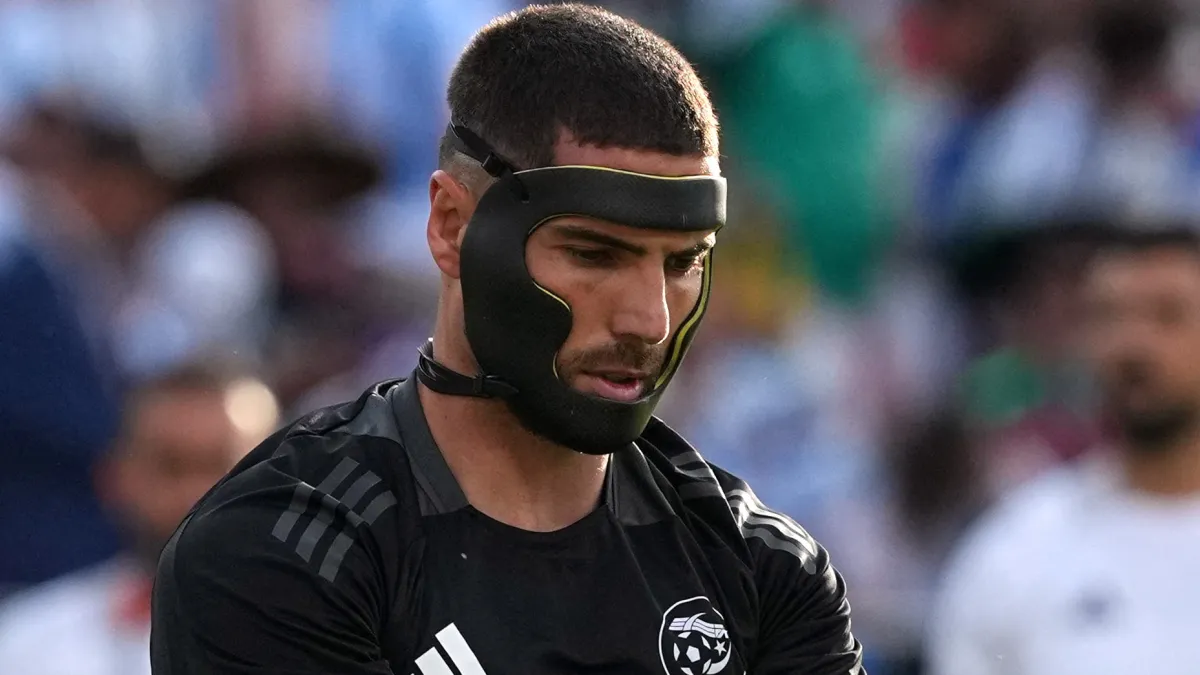
Luca Zidane carries one of football’s most famous surnames, but his international story has taken a path of its own. As attention builds around the World Cup 2026 conversation and dual-national players continue to shape the global game, Zidane’s decision to represent Algeria rather than France has become a compelling talking point for supporters following the Republic of Ireland World Cup 2026 picture, the 48 team World Cup expansion and the wider FIFA landscape.
The goalkeeper, now in his late 20s and playing club football in Spain, is the son of France legend Zinedine Zidane. Yet despite that direct family link to one of the greatest figures in French football history, Luca opted to wear Algeria’s colours — a choice rooted less in fame and more in family heritage, identity and personal conviction.
A family name, but a different international path
Luca is the second eldest of Zinedine Zidane’s four sons and the only goalkeeper among them. While his surname naturally invites comparisons, his career has unfolded away from the glamour often associated with his father’s playing days. Instead, he has focused on building his own profile as a professional keeper, most recently in Spanish football.
His move to Algeria was not a sudden publicity decision. It reflected a long-standing bond with his family’s background. Algeria, the homeland of his grandparents, has remained a meaningful part of his upbringing. By choosing the Desert Foxes, Luca aligned his football future with a cultural connection he has described as genuine and deeply personal.
Why Algeria made sense
For many dual-eligible players, international allegiance comes down to more than trophies or status. It can involve:
- Family roots and ancestry
- Cultural identity shaped at home
- A stronger personal sense of belonging
- A clearer pathway to international football
That appears to be the case here. Luca has spoken about growing up within Algerian culture and said the choice was ultimately his, even though he discussed it with his family. Importantly, he also noted that his father supported the move because it was something he truly wanted.
That perspective matters in modern football, where players are increasingly open about choosing the nation that feels most authentic to them. In a cycle that will eventually lead to the FIFA World Cup 2026, such decisions may also influence debates around World Cup 2026 teams, qualifiers and squad depth across continents.
Read more: Why Irish football fans are already looking ahead to the next global tournament
What it means for Algeria
Algeria has long relied on technically gifted players with strong European development backgrounds, and Luca Zidane fits that mould. A goalkeeper with experience in Spain brings composure, positional awareness and pedigree — qualities that can be valuable in major tournament football, whether in African competition or on the road to the World Cup 2026.
For Algeria, his inclusion is about more than the Zidane surname. It adds depth in a specialist position and underlines the nation’s ability to attract players who qualify through heritage and feel a real connection to the badge.
Explore: How major tournaments are changing football broadcast habits in Ireland
A broader trend in international football
Luca Zidane’s decision reflects a wider reality in the modern game. National teams increasingly benefit from players shaped by multiple identities, and supporters have grown more accepting of those choices when they are clearly grounded in heritage and sincerity.
As fans track the World Cup 2026 schedule, World Cup 2026 draw developments and how to watch World Cup 2026 in Ireland, stories like this remind us that international football is not only about fixtures and formats. It is also about belonging.
Read more: The rising value of global sporting events for travel and tourism
Identity over expectation
There was always going to be curiosity around the son of Zinedine Zidane and which nation he would represent. France may have seemed the obvious assumption from the outside, but Luca Zidane chose Algeria because it matched his sense of self. In an era already building toward World Cup 2026, that makes his story relevant far beyond one player or one squad. The biggest takeaway is simple: in international football, heritage and identity can matter just as much as legacy.
Explore: What the expanded global football format could mean for fans and host cities