


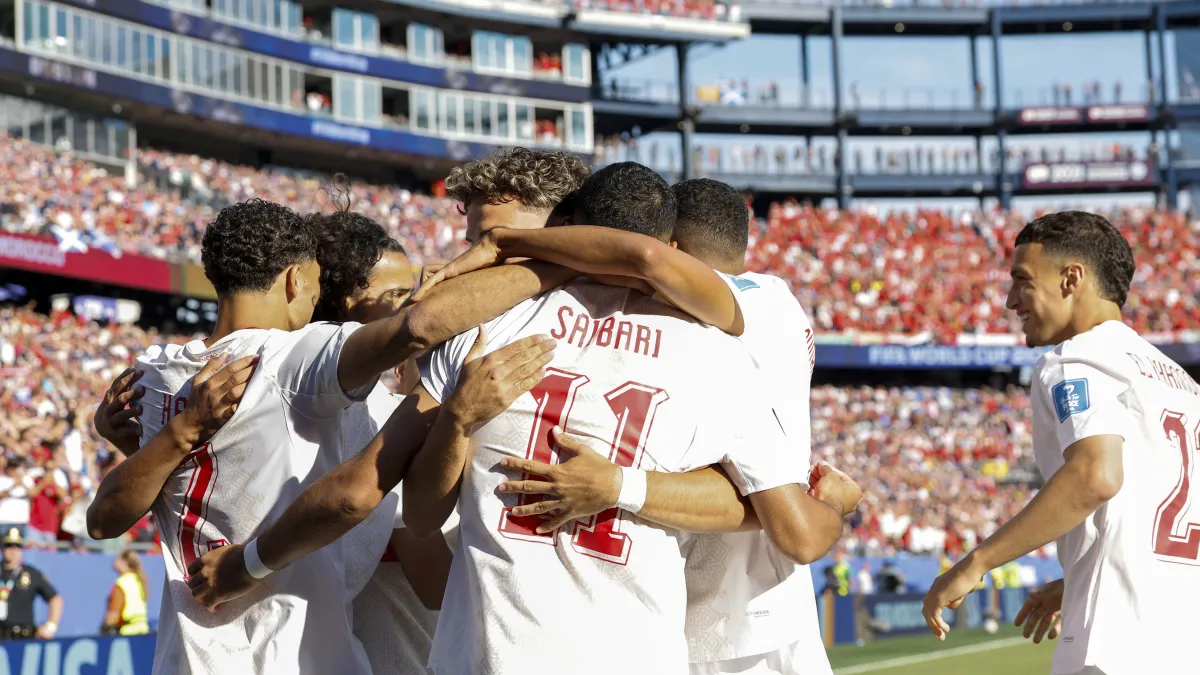
Morocco’s rise is no longer a surprise story — it is one of the defining competitive arcs of the modern World Cup 2026 cycle. By reaching the last eight again, the Atlas Lions have turned a memorable run in Qatar into proof of lasting quality, giving African football another landmark moment ahead of the business end of the FIFA World Cup 2026.
The latest step came with a commanding win over Canada, a result that pushed Morocco into another quarterfinal and underlined why this squad is now discussed alongside the tournament’s established contenders. In an era shaped by the 48 team World Cup and wider global depth, Morocco have shown that consistency at this level is every bit as impressive as a one-off breakthrough.
Morocco’s World Cup 2026 run puts history into context
This is Morocco’s seventh appearance at the finals, but only in recent tournaments has the country built sustained momentum on the biggest stage. The semifinal run in 2022 changed perceptions. This latest push in the Football World Cup 2026 confirms that it was not an outlier.
Morocco have now turned three tournament appearances into knockout qualification, and their recent record tells the story of a team that has matured tactically, mentally and technically. Their place in the World Cup 2026 knockout stage also adds another layer to a period that has included silverware and an extended winning streak in international football.
- 1970: group-stage exit
- 1986: reached the Round of 16
- 1994: group-stage exit
- 1998: group-stage exit
- 2018: group-stage exit
- 2022: semifinalists
- 2026: quarterfinalists and still alive
That trajectory matters in a tournament where the World Cup 2026 teams are being measured not just by talent, but by repeatability under pressure.
Read more: England’s tournament pressure explained
A squad built on structure, speed and belief
Morocco’s strength starts with balance. Achraf Hakimi remains the headline figure, bringing elite quality from the right side and leadership in transition. Midfield influence has also been crucial, with attacking support arriving from deeper areas and giving Morocco a sharper edge than many expected when the World Cup 2026 draw set the path ahead.
In goal, Yassine Bounou continues to provide calm in high-stakes moments, while the team’s defensive organisation has again made them awkward opponents. The result is a side capable of controlling rhythm without losing its threat on the counter.
Manager Mohamed Ouahbi deserves credit as well. Taking charge shortly before the tournament was never going to be simple, but he has kept continuity while adding his own authority. That stability is invaluable in a competition shaped by tight turnarounds, World Cup 2026 fixtures and constant tactical adjustments.
Explore: A closer look at major host-city sporting culture
Why this matters beyond Morocco
No African nation has lifted the trophy, and that remains one of international football’s great unfinished stories. Yet Morocco’s back-to-back deep runs have expanded what feels realistic. The conversation around African contenders is no longer based only on potential; it is now backed by results.
For fans following the World Cup 2026 schedule, this is exactly the kind of narrative that gives the tournament weight beyond the bracket. Morocco’s progress also adds intrigue for supporters tracking the World Cup 2026 dates, the road to the World Cup 2026 final and how emerging powers can challenge traditional elites.
As attention shifts to the next match, the significance is already secure: Morocco have set a new standard for African football at the World Cup 2026. Whether this journey ends in the semifinals or goes even further, the Atlas Lions have shown that their place among the game’s serious nations is deserved, durable and impossible to dismiss.