




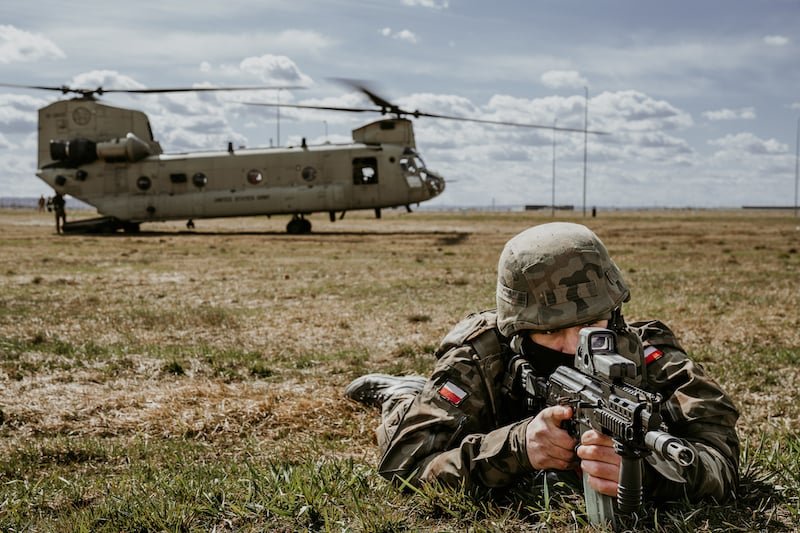
The latest Europe news has sharpened attention on Poland after reports that US intelligence warned of a possible Russian move against the Nato member in the coming months. While the scenario is alarming, the wider strategic picture suggests that any attack on Poland would carry enormous risks for the Kremlin and could become Vladimir Putin’s most consequential miscalculation yet.
According to reports cited in Polish and British media, the threat discussed by US officials could range from a limited incursion launched from Kaliningrad or Belarus to a strike on critical infrastructure. In the broader ireland news, irish news, and European security conversation, the significance of this warning goes far beyond Poland’s borders: it touches the credibility of Nato, the unity of Europe, and the future trajectory of the war in Ukraine.
Europe News: Why Poland Is Now Central to Europe’s Security Debate
Poland sits on Nato’s eastern flank and has become one of Europe’s most important security actors since Russia’s full-scale invasion of Ukraine in 2022. Any hostile move against Polish territory would not simply be a bilateral clash. It would test collective defence under Article 5 and force Europe and the United States to decide how firmly they are prepared to respond.
The logic behind the reported Russian calculation is straightforward but dangerous. A limited strike could be intended to:
- Undermine confidence in Nato’s mutual defence guarantee
- Create fear among European populations
- Pressure Western governments to reduce support for Ukraine
- Demonstrate that Russia can escalate beyond the current battlefield
Yet that same logic may also be deeply flawed. Poland is not an isolated or weak target. It has spent years strengthening border defences, investing heavily in armed forces, and positioning itself as a frontline state in Europe’s deterrence architecture.
Read more: latest Ireland breaking news and European affairs analysis | Irish politics and world security updates today
Why a Russian Attack on Poland Could Backfire
One of the clearest lessons from the war in Ukraine is that escalation does not automatically produce victory. Russia failed to quickly topple Kyiv, then became bogged down in a prolonged war marked by heavy losses, sanctions, and mounting economic strain. If Moscow were to open a new front against Poland, it would be taking on a far more institutionally connected and militarily prepared opponent.
Poland’s military position is stronger than many assume
Poland now fields one of the largest and best-funded armies in Nato. It has modernised equipment, expanded troop numbers, and fortified vulnerable border zones near Belarus and Kaliningrad. Even in a scenario where political hesitation emerged elsewhere, Poland would not be facing Russian pressure alone.
Likely support could come rapidly from:
- The United Kingdom
- The Baltic states
- Nordic allies
- Ukraine, whose own resistance has reshaped Europe’s defence mindset
This is why many analysts see an attack on Poland not as a shortcut to ending the Ukraine war, but as a trigger for broader Russian isolation and potentially severe military consequences.
Russia’s capacity is already under pressure
Another key point in this Europe news story is Russia’s current level of strain. Years of war in Ukraine, battlefield attrition, and Western sanctions have imposed deep costs on the Russian military and economy. Opening confrontation with Poland would mean gambling that a weakened force could intimidate a better-protected Nato state without sparking a stronger coalition response.
That is a high-risk assumption. Instead of dividing Europe, such a move could unify it further.
Explore more: in depth European geopolitics and luxury world affairs insights | top Irish current affairs coverage and EU security headlines
The Nuclear Question and the Limits of Escalation
No serious discussion of this Europe news development can ignore the nuclear dimension. The concern among security observers is that if conventional escalation failed, Moscow could again resort to nuclear signalling to intimidate the West.
However, nuclear escalation is far less controllable than conventional pressure. Any movement involving Russia’s nuclear forces would be closely watched by Western intelligence. The danger is not only the strike itself, but the possibility of miscalculation, panic, or pre-emptive responses driven by uncertainty about Russian intent.
That makes nuclear threats useful for coercive messaging, but extraordinarily dangerous as an actual next step. For that reason, many analysts believe the Kremlin understands that climbing too far up the escalation ladder could end in catastrophic strategic failure.
What This Means for Ireland and the Wider European Audience
For readers following ireland news and irish news, the Poland warning matters because European security shocks rarely stay regional. Any conflict involving Nato territory would affect energy markets, trade, defence spending, migration planning, financial confidence, and diplomatic positioning across the EU.
Ireland is militarily non-aligned, but it is deeply connected to the European political and economic system. That means instability on Nato’s eastern edge would still have real consequences for Irish households, Irish business, and EU policymaking.
Key questions readers are asking
- Is an attack on Poland inevitable?
No. Intelligence warnings highlight risk, not certainty, and deterrence may be working precisely because the costs are so high. - Would Nato respond?
Any strike on Polish territory would create immediate pressure for a collective response, making this one of the most dangerous scenarios in European security. - Could this change the Ukraine war?
Yes, but likely in ways Russia may not want, including stronger unity among European allies.
Conclusion
This Europe news warning is serious, but it also underlines a central reality of the current conflict: escalation is not the same as strength. A Russian move against Poland could be designed to frighten Europe and fracture Nato, yet it may instead expose the limits of Kremlin power, deepen Russia’s isolation, and accelerate strategic failure. For anyone tracking Europe news, the clearest takeaway is that Poland is no soft target, and any attack there could become the moment when Putin’s gamble finally turns decisively against him.