


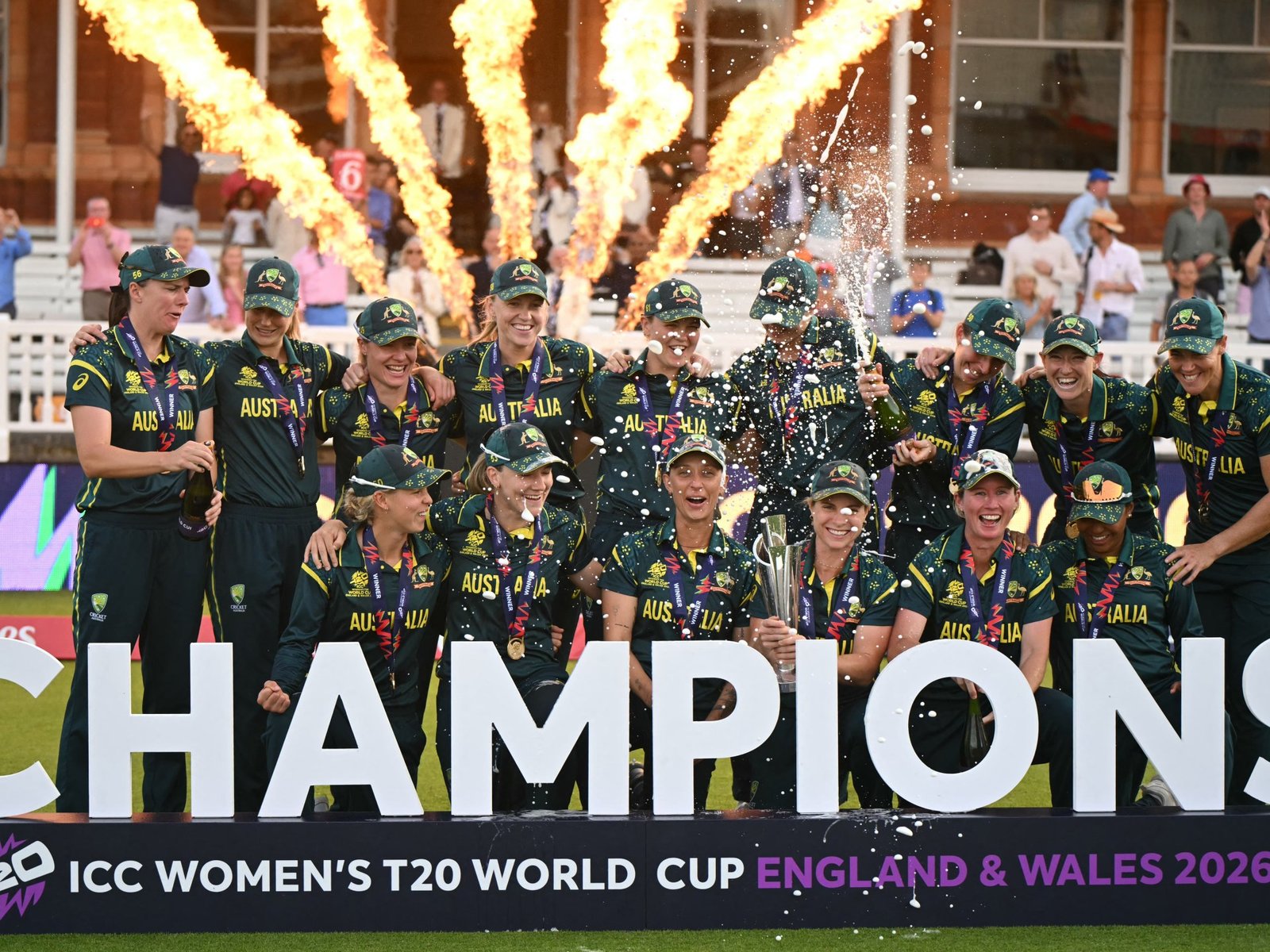
Australia underlined their dominance in global cricket with a clinical victory over England at Lord’s, sealing a record seventh Women’s T20 World Cup title. In one of the biggest stories trending across Europe news today, the defending powerhouse produced a composed chase and a sharp bowling display to beat the hosts by seven wickets in London.
Played in front of a packed crowd at the home of cricket, the final had all the buildup of a classic contest. Instead, Australia showed why they remain the benchmark in the women’s game, chasing 151 with 17 balls left after England’s innings never quite gathered enough momentum.
Europe news: Australia deliver another World Cup masterclass
England posted 150-4, a total that looked competitive on paper but proved below par against an Australian batting lineup in ruthless form. The chase was shaped by a superb second-wicket stand between Beth Mooney and Phoebe Litchfield, whose partnership took the pressure off early and drained England’s hopes.
Mooney struck 64 from 49 balls in a measured but assertive innings, while Litchfield added a lively 48 from 35 deliveries. Their stand pushed Australia into complete control and ensured the target was never allowed to become complicated.
For readers following major international developments through irish news and ireland news coverage, this final also reinforced Australia’s wider grip on women’s cricket. The team came through the tournament unbeaten and once again handled the biggest stage with clarity and confidence.
- Australia won by 7 wickets
- Target chased: 151
- Beth Mooney scored 64
- Phoebe Litchfield made 48
- Australia lifted a record seventh Women’s T20 World Cup
England’s innings: steady finish after early setbacks
England’s total was built around an unbeaten 80-run partnership between captain Nat Sciver-Brunt and Freya Kemp. Sciver-Brunt made 58 from 53 balls, while Kemp accelerated with 44 from 28, including a straight six in the closing stages.
But the recovery came after a difficult start. Australia’s attack squeezed England inside the powerplay and made scoring hard from the outset. Lucy Hamilton claimed an important early wicket when Amy Jones fell cheaply, and Annabel Sutherland removed Danni Wyatt-Hodge, who had arrived at the final as the tournament’s leading run-scorer.
Alice Capsey briefly threatened to change the tempo, but Sophie Molineux bowled her for 23, while Heather Knight was dismissed for just two. Kim Garth also kept things tight with an economical spell that prevented England from truly launching until late in the innings.
The problem for England was not simply wickets lost, but the slow rate at which the innings developed. By the time Sciver-Brunt and Kemp found fluency, Australia had already done enough damage to keep the total within reach.
Read more: latest Ireland breaking news updates and analysis | top Irish sports headlines and Ireland news coverage
Mooney and Litchfield break the final open
Australia’s response was immediate and positive. Georgia Voll set the tone by finding the boundary from the first ball of the chase, signalling that England’s bowlers would get no room to settle. Although Voll fell early, the wicket only brought together the pair who decided the final.
Mooney, later named player of the tournament, judged the chase expertly. She rotated strike, punished loose deliveries and ensured Australia stayed ahead of the required rate. Litchfield complemented her perfectly with clean hitting and busy running, helping the score surge to 98-1 after 10 overs.
Once that platform was built, England needed something special. It never came. Litchfield was eventually bowled, and Mooney also departed before the finish, but the result had effectively already been settled. Ellyse Perry then guided Australia home as England’s frustration was summed up by the winning moment arriving via wides.
Why Australia were too strong
- Powerplay control: Their bowlers restricted England early and forced a slower scoring rate.
- Big-match composure: Australia never panicked during the chase.
- Partnership batting: Mooney and Litchfield turned the game with a decisive stand.
- Tournament consistency: Australia remained unbeaten from start to finish.
Explore more: in-depth European sports and luxury lifestyle stories for Irish readers | best Ireland online news for major UK and Europe sports events
What this result means for women’s cricket
This was more than another title. It was a fresh reminder that Australia continue to set the standard in the women’s game, not just through talent but through execution under pressure. England reached the final with home support and genuine belief, yet Australia’s control of the contest highlighted the gap that still exists at the sharpest end.
England coach Charlotte Edwards admitted her side were second best, while also insisting her team are not far away. That may be true, especially given the quality shown by Sciver-Brunt and Kemp, but this final showed that getting close to Australia and actually beating them are very different tasks.
For audiences searching Europe news, ireland news, and irish news around major international sporting events, the headline is clear: Australia remain the undisputed force in women’s T20 cricket. Their seventh world title was not won by drama alone, but by precision, depth and a winning standard few teams have matched.
Conclusion
Australia’s emphatic win over England at Lord’s was a statement performance and one of the standout stories in Europe news this week. With Mooney and Litchfield leading the chase and the bowlers controlling the final from the start, Australia once again proved why they are the team everyone else must measure themselves against.
FAQs
Who won the Women’s T20 World Cup 2026 final?
Australia won the final, beating England by seven wickets at Lord’s in London.
How many Women’s T20 World Cup titles have Australia won?
Australia have now won a record seven Women’s T20 World Cup titles.
Who was the top performer in the final?
Beth Mooney played a key role with 64 runs and was also named player of the tournament.
What score did England make in the final?
England finished on 150-4, with Nat Sciver-Brunt scoring 58 and Freya Kemp adding 44 not out.