


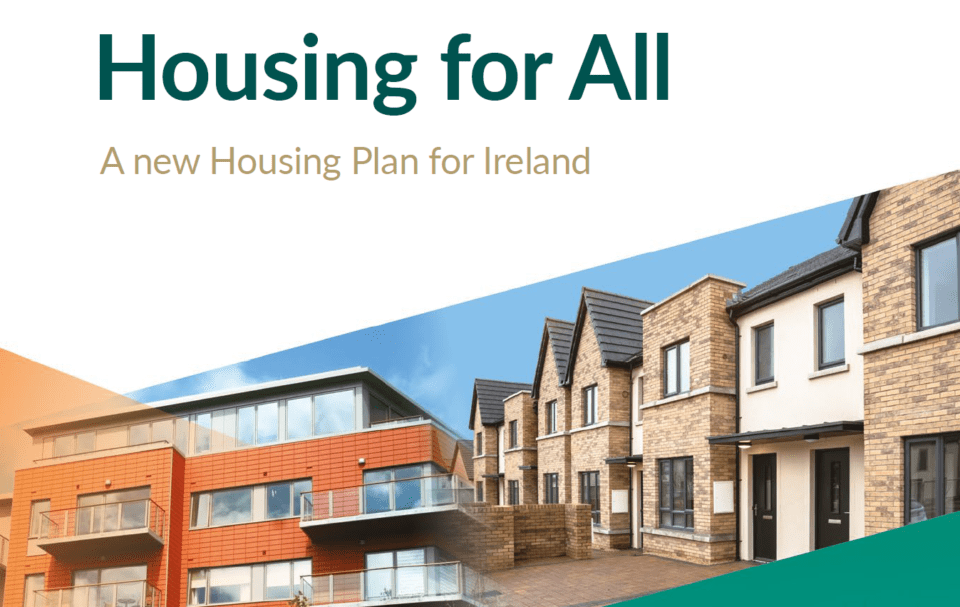
Buying a new home in Ireland can feel impossible when the mortgage approved by the bank, your available deposit and the price of the property do not quite meet.
Two government-supported initiatives may help eligible buyers close that gap: the Help to Buy Scheme, commonly called HTB, and the First Home Scheme, commonly called FHS.
The schemes serve different purposes.
Help to Buy is a refund of qualifying Income Tax and Deposit Interest Retention Tax previously paid. It can help an eligible first-time buyer fund the deposit needed to purchase or self-build a new home.
The First Home Scheme is a shared-equity arrangement. It can provide part of the purchase price or eligible build cost in exchange for the scheme taking a percentage equity share in the home.
Eligible buyers can use Help to Buy and the First Home Scheme together when purchasing a qualifying new-build home or completing an eligible self-build. However, using HTB reduces the maximum First Home Scheme contribution from 30% to 20% of the property’s purchase price or eligible build cost.
This complete guide explains how HTB and FHS work together, who may qualify, how much support may be available, the application order, the long-term costs and the questions buyers should ask before proceeding.
Help to Buy and First Home Scheme: quick answer
Yes, eligible applicants can use the Help to Buy Scheme and First Home Scheme together when buying a qualifying new-build property or undertaking an eligible self-build.
When the two schemes are combined:
- HTB can provide up to €30,000, subject to the applicant’s qualifying tax payments and other conditions.
- The FHS may provide up to 20% of the property purchase price or eligible build cost.
- A first-time buyer normally needs a total deposit of at least 10%.
- HTB may contribute towards that deposit.
- The buyer must obtain the maximum mortgage available from a participating lender, subject to the scheme’s lending requirements.
- The FHS receives an equity share in the home.
- FHS service charges begin from the start of year six unless the equity share has already been redeemed.
These are maximum figures, not automatic entitlements. The actual support depends on the buyer’s circumstances, mortgage approval, tax history, property price, location and the size of the funding gap.
What is the Help to Buy Scheme?
The Help to Buy Scheme is a tax-refund incentive for qualifying first-time property purchasers.
It is designed to help eligible buyers fund the deposit needed to purchase a newly built house or apartment or to build a new home.
The refund is based on qualifying Irish Income Tax and DIRT paid during the relevant four-year period. USC and PRSI are not included when calculating the available refund.
Under the enhanced Help to Buy relief, an eligible applicant can receive the lowest of:
- €30,000;
- 10% of the qualifying property purchase price or approved self-build valuation; or
- the amount of eligible Income Tax and DIRT paid during the relevant four-year period.
The €30,000 limit applies to the property, not individually to each buyer. Two applicants purchasing together cannot claim €30,000 each for the same property.
Simple HTB examples
For a qualifying property priced at €250,000:
- 10% of the property price is €25,000.
- The maximum possible HTB amount would therefore be €25,000.
- The applicant must also have paid at least that amount in qualifying tax.
For a property priced at €350,000:
- 10% is €35,000.
- The HTB cap is €30,000.
- The maximum possible refund is therefore €30,000, provided sufficient qualifying tax was paid.
For a property priced at €500,000:
- 10% is €50,000.
- The scheme remains capped at €30,000.
- The maximum possible refund is €30,000, subject to tax paid.
What is the First Home Scheme?
The First Home Scheme is a shared-equity scheme intended to help eligible homebuyers where a gap remains between:
- the price of the home;
- the buyer’s deposit;
- and the maximum mortgage available from a participating lender.
The scheme may provide part of the purchase price or eligible self-build cost. In return, the FHS takes an equity share in the property.
The FHS is not a traditional mortgage and is not the same as a cash grant.
If the scheme provides 10% of the purchase price, it normally receives a 10% equity share in the home. If it provides 15%, it takes a 15% share.
Subject to eligibility and assessment, the FHS may provide:
- up to 30% where HTB is not used; or
- up to 20% where HTB is used.
The minimum FHS contribution is generally 2.5% of the property purchase price or eligible build cost, or €10,000, whichever is higher.
Can Help to Buy and the First Home Scheme be used together?
Yes.
HTB and FHS can be combined for eligible:
- new-build home purchases; and
- qualifying self-builds.
HTB cannot be combined with every FHS product. For example, it is not available for an FHS arrangement involving the purchase of an eligible tenant’s existing second-hand rental home because HTB is limited to qualifying new homes and self-builds.
When HTB is used, the maximum FHS equity contribution is reduced to 20%.
This does not mean every applicant will receive the full 20%. The FHS is intended to bridge the actual funding shortfall rather than automatically providing the maximum available amount.
How HTB and FHS work together
The combined structure generally consists of four parts:
- The buyer’s own savings or eligible deposit contribution
- The Help to Buy refund
- The mortgage
- The First Home Scheme equity contribution
Together, these must cover the purchase price and any costs that are not included in the mortgage or scheme funding.
Example: buying a €420,000 new home
Suppose a qualifying first-time buyer agrees to purchase a new home for €420,000.
The buyer has:
- €12,000 in personal savings
- €30,000 approved through HTB
- a mortgage approval of €336,000
The funding position is:
| Funding source | Amount |
|---|---|
| Personal savings | €12,000 |
| Help to Buy | €30,000 |
| Mortgage | €336,000 |
| Total before FHS | €378,000 |
| Purchase price | €420,000 |
| Remaining gap | €42,000 |
The buyer may apply for an FHS contribution of €42,000.
That equals 10% of the €420,000 purchase price, so the First Home Scheme would take a 10% equity share in the home.
The completed structure would be:
| Funding source | Amount |
|---|---|
| Personal savings | €12,000 |
| HTB | €30,000 |
| Mortgage | €336,000 |
| FHS | €42,000 |
| Total | €420,000 |
The buyer owns the home, but the FHS retains a 10% equity interest until it is redeemed or becomes repayable under the scheme terms.
Example using the maximum 20% FHS contribution
Consider a qualifying new home priced at €450,000.
The buyer has:
- €15,000 in savings
- €30,000 from HTB
- a mortgage of €315,000
The total before FHS is €360,000.
The remaining gap is:
€450,000 − €360,000 = €90,000
€90,000 is exactly 20% of the property price.
The funding structure would be:
| Funding source | Amount |
|---|---|
| Savings | €15,000 |
| Help to Buy | €30,000 |
| Mortgage | €315,000 |
| First Home Scheme | €90,000 |
| Total | €450,000 |
The FHS would hold a 20% equity share in the home.
This is the maximum percentage generally available when HTB is also used.
Does Help to Buy cover the full deposit?
It can, but not always.
First-time buyers generally need a deposit equal to at least 10% of the purchase price under current mortgage lending rules and FHS requirements.
HTB may contribute towards that deposit.
For a home priced at €300,000:
- The 10% deposit is €30,000.
- HTB may provide up to €30,000.
- A buyer with sufficient qualifying tax may potentially cover the full 10% deposit using HTB.
For a home priced at €400,000:
- The 10% deposit is €40,000.
- HTB remains capped at €30,000.
- The buyer would generally need at least another €10,000, unless another acceptable source of deposit funds is available.
For a home priced at €500,000:
- The 10% deposit is €50,000.
- HTB can provide no more than €30,000.
- The buyer would normally need at least €20,000 from savings or another acceptable source.
The buyer must also budget separately for legal fees, valuation costs, survey or snagging fees, insurance, stamp duty, furnishing and moving costs.
Help to Buy eligibility rules
To qualify for HTB, applicants generally must satisfy several conditions.
You must be a first-time purchaser
Every person buying the property must generally qualify as a first-time purchaser.
If one joint buyer previously purchased or built a home, the application may fail even where the other buyer has never owned property.
The property must be newly built
HTB is generally available for:
- a new house;
- a new apartment;
- or a qualifying self-build.
The property must not previously have been used or suitable for use as a home.
An ordinary second-hand home does not qualify.
The home must be your main residence
The property must be purchased or built as the applicant’s principal private residence.
It cannot be purchased as:
- a rental investment;
- a holiday property;
- or a property intended primarily for another person.
The property must meet the price limit
The qualifying purchase price or approved self-build valuation must not exceed €500,000.
A property priced above €500,000 does not receive a reduced HTB amount. It falls outside the scheme.
The mortgage must meet the required loan-to-value condition
The qualifying mortgage must generally be at least 70% of the property’s purchase value or approved self-build valuation.
This condition can become important when HTB is combined with FHS because the buyer must ensure the mortgage, deposit and equity contribution are structured correctly.
The buyer must be tax compliant
Applicants must be tax compliant and have all required tax returns submitted.
A buyer who has paid sufficient tax may still face delays or rejection if tax returns or compliance requirements are outstanding.
The buyer must live in the property
The buyer must occupy the home as their main residence for the required period. Revenue states that an eligible applicant must live in the property as their main home for five years after purchase or completion.
Selling, renting out or leaving the property within the relevant period can create clawback implications.
First Home Scheme eligibility
FHS eligibility is separate from HTB eligibility.
Approval for one scheme does not automatically mean approval for the other.
An applicant may qualify for HTB but not FHS, or qualify for FHS while receiving less HTB than expected.
Buyer status
The FHS is primarily available to eligible first-time buyers and certain other qualifying applicants, including some people covered by the scheme’s fresh-start provisions.
Fresh-start rules may assist applicants who previously owned a home but no longer retain an interest because of certain personal insolvency or relationship circumstances.
Qualifying property
The property must fall within an eligible FHS category.
Depending on the FHS product, this may include:
- a qualifying new-build house or apartment;
- an eligible self-build;
- or certain other scheme-specific property categories.
HTB can only be combined with the eligible new-build and self-build routes.
Property price ceilings
The FHS applies regional property price ceilings.
These limits vary according to the local authority area and property type.
A property priced above the applicable ceiling will not qualify, even if the buyer meets the other conditions.
Buyers must therefore check the current ceiling for the exact local authority area before paying a non-refundable booking deposit.
Participating lender
The buyer must obtain a mortgage from an FHS participating lender.
The lender assesses mortgage affordability independently.
FHS approval does not override the bank’s lending decision.
Maximum mortgage capacity
The scheme is intended to fill a genuine funding gap.
Applicants are generally expected to obtain the maximum mortgage available to them under the participating lender’s policies and the scheme rules.
A buyer usually cannot intentionally take a smaller mortgage simply to receive a larger FHS equity contribution.
Minimum FHS contribution
The minimum contribution is generally:
- 2.5% of the purchase price or eligible build cost; or
- €10,000,
whichever is higher.
A funding gap below the relevant minimum may not be covered through the scheme.
What is shared equity?
Shared equity means the scheme contributes money towards the property and receives a corresponding percentage interest in its value.
Suppose:
- the home costs €400,000;
- and the FHS contributes €40,000.
The FHS contribution equals 10% of the original price.
The scheme therefore holds a 10% equity share.
If the home later rises in value to €500,000, buying back the full 10% share would generally cost €50,000, plus any outstanding service charges.
If the property falls in value to €350,000, the value of the 10% share would generally fall to €35,000, subject to the scheme’s valuation and contractual rules.
This is one of the most important differences between FHS funding and a standard fixed loan.
The amount required to redeem the equity share can rise or fall with the value of the property.
Is the First Home Scheme a loan?
It is more accurate to describe the FHS as a shared-equity facility rather than a standard loan.
There is no conventional monthly capital repayment schedule for the equity share.
However:
- the FHS owns an equity percentage;
- service charges begin from year six;
- the share may become more expensive to redeem if the property value rises;
- and full repayment is required in certain circumstances.
The absence of immediate monthly repayments should not be confused with free money.
First Home Scheme service charges
No FHS service charge applies during the first five years.
From the beginning of year six, service charges apply at fixed annual rates:
| Period | Annual service-charge rate |
|---|---|
| Years 1–5 | 0% |
| Years 6–15 | 1.75% |
| Years 16–29 | 2.15% |
| Year 30 onwards | 2.85% |
The charges accrue against the remaining equity facility.
Example service charge
Suppose:
- the original purchase price was €400,000;
- the FHS provided 10%;
- the original FHS amount was €40,000;
- and no part of the share has been redeemed.
At the year-six rate of 1.75%:
€40,000 × 1.75% = €700 per year
That is approximately €58.33 per month, although charges are calculated and administered under the scheme’s contractual process.
If part of the equity has been redeemed, future service charges are adjusted based on the remaining equity percentage.
Can the service charge be deferred?
The FHS terms may allow service charges to be paid, deferred or handled according to the available options and contract rules.
However, deferred charges do not simply disappear.
Outstanding service charges may need to be paid when:
- redeeming the equity share;
- selling the property;
- refinancing in certain circumstances;
- or when another repayment event occurs.
A buyer should understand the long-term effect of deferring charges before choosing that option.
Can you buy back the FHS equity share?
Yes.
Owners can generally redeem the equity share in full or make eligible partial redemption payments, subject to the scheme’s rules.
A current property valuation is normally required when buying back all or part of the share.
Full redemption example
You buy a home for €400,000.
The FHS provides €40,000 and takes a 10% share.
Five years later, the home is valued at €460,000.
To redeem the full 10% share, the amount would generally be:
10% of €460,000 = €46,000
Any outstanding service charges or relevant costs would also need to be addressed.
Partial redemption example
Suppose the FHS owns 15% and the owner can afford to buy back 5%.
After the redemption:
- the owner has removed 5% of the scheme’s interest;
- the FHS retains 10%;
- future exposure to property-price growth is reduced;
- and future service charges are based on the remaining equity share under the scheme calculation.
Partial redemption can be useful for households whose income rises after purchasing.
Is there a penalty for repaying FHS early?
The FHS does not operate like a traditional fixed-rate mortgage with an early repayment penalty.
However, valuation and administrative requirements may apply.
The amount needed is based on the relevant percentage of the property’s current value, not simply the original cash amount received.
Repaying early may be financially attractive where:
- the home has not increased significantly in value;
- the owner has accumulated savings;
- income has increased;
- or the owner wants to avoid future service charges.
When must the FHS share be repaid?
The equity share can remain in place for the permitted term, but certain events can require full redemption.
These may include:
- selling the property;
- no longer using it as the qualifying main residence;
- changing the property’s use in a way not permitted under the contract;
- reaching the end of the facility term;
- or other events specified in the customer contract.
Buyers should read the FHS legal documents carefully and obtain independent legal advice.
What happens when you sell the home?
When the property is sold, the FHS equity share must generally be redeemed.
The property is valued through the sale price or relevant valuation process.
Suppose:
- the FHS owns 12%;
- the property sells for €500,000.
The scheme’s 12% share would generally equal:
€500,000 × 12% = €60,000
Outstanding service charges and relevant costs may also be payable.
The mortgage is separately repaid from the sale proceeds.
The owner receives the balance after paying:
- the mortgage;
- the FHS share;
- outstanding charges;
- estate-agent fees;
- legal costs;
- and other sale expenses.
What happens if the property value falls?
Because the FHS holds a percentage equity interest, the amount needed to redeem the share may fall when the property’s value falls.
For example:
- original price: €400,000;
- FHS share: 10%;
- current value: €360,000.
The 10% share would generally be valued at €36,000 rather than the original €40,000.
The detailed outcome remains subject to the scheme contract and valuation rules.
A decline in value does not remove the mortgage debt owed to the bank.
Does the FHS receive part of home improvements?
This is an important question for buyers planning major renovations.
Because the FHS share is linked to the property’s value, improvements funded by the owner could potentially increase the amount required to redeem the scheme’s percentage.
The scheme has processes dealing with qualifying improvements and valuations.
Before funding a major extension, attic conversion or substantial renovation, owners should confirm:
- whether the work must be notified;
- what evidence of costs should be retained;
- and how the improvement may be treated in a future valuation.
Keep invoices, planning records, contracts and proof of payment for significant work.
The correct order for applying for HTB and FHS
The process needs to be managed carefully.
Step 1: check HTB tax eligibility
Sign in to Revenue’s myAccount or ROS and begin the Help to Buy application.
Make sure:
- all tax returns are submitted;
- tax details are correct;
- and all applicants are tax compliant.
Revenue will calculate the maximum potential HTB relief based on the relevant tax history.
Step 2: calculate your real deposit
Add together:
- personal savings;
- the provisional HTB amount;
- documented gifts, where acceptable to the lender;
- and any other eligible deposit funds.
Do not use money needed for stamp duty, legal fees or furnishing as part of the house deposit calculation.
Step 3: obtain mortgage approval in principle
Apply to a participating mortgage lender.
The lender will assess:
- income;
- employment;
- loans;
- credit history;
- childcare costs;
- monthly spending;
- savings record;
- and repayment capacity.
The lender’s approval determines how much of the property price can be funded by mortgage.
Step 4: identify the genuine funding gap
Calculate:
Purchase price − mortgage − deposit − HTB = funding gap
The FHS may help cover that shortfall within the applicable limits.
Step 5: check the property price ceiling
Confirm that the chosen property is below the FHS ceiling for the relevant local authority area and property type.
Do this before committing to a non-refundable booking payment.
Step 6: apply to the First Home Scheme
The FHS can issue a preliminary indication while the buyer is still finalising the property and mortgage arrangements.
Once the buyer’s decisions and documentation are complete, the scheme may issue an Eligibility Certificate confirming the approved equity amount.
Step 7: finalise the mortgage
The lender considers the confirmed FHS contribution and issues the final mortgage Letter of Offer, subject to its requirements.
Step 8: complete the HTB claim
For a new-build purchase, the qualifying contractor or developer verifies the property and claim through the Revenue process.
For a self-build, the solicitor and lender are involved in verification.
Step 9: complete the legal process
Your solicitor reviews:
- the purchase contract;
- title;
- planning;
- mortgage documents;
- HTB documentation;
- FHS customer contract;
- equity charge;
- and closing requirements.
Step 10: draw down the funds
At closing, the mortgage, HTB funds, buyer’s deposit and FHS contribution are brought together to complete the purchase.
Documents buyers may need
The exact requirements vary, but applicants may need:
- photo identification;
- proof of address;
- PPS numbers;
- payslips;
- salary certificates;
- employment details;
- bank statements;
- savings statements;
- mortgage approval in principle;
- property booking details;
- purchase price confirmation;
- proof of HTB approval;
- tax compliance records;
- property valuation;
- solicitor information;
- and evidence explaining gifted deposit funds.
Self-employed applicants may also need:
- certified accounts;
- Revenue forms;
- tax-clearance information;
- business bank statements;
- and supporting income documentation.
Can couples apply together?
Yes, eligible couples can apply jointly.
However, the conditions apply to all applicants.
For HTB, every purchaser must generally be a first-time buyer.
The tax refund is calculated across the applicants but remains subject to the overall €30,000 property cap.
For FHS, the combined household income, mortgage capacity, buyer status and property eligibility are assessed.
A couple should avoid assuming they will receive €30,000 each through HTB. The maximum enhanced relief is €30,000 per qualifying property.
Can a single buyer use both schemes?
Yes.
A single eligible first-time buyer can use HTB and FHS together.
Single applicants may find the combination especially useful because mortgage affordability is based on one income.
However, the buyer must still satisfy:
- lender affordability rules;
- the 10% deposit requirement;
- HTB tax and property conditions;
- FHS criteria;
- and the relevant property price ceiling.
Can self-builders use HTB and FHS together?
Yes, eligible self-builders may use the schemes together.
HTB is based on the approved valuation of the completed home and qualifying mortgage conditions.
The FHS self-build product can provide up to:
- 30% of eligible build cost without HTB; or
- 20% where HTB is used.
For eligible FHS self-build applicants, equity in the site may contribute towards the required 10% deposit.
Self-build applicants should pay close attention to:
- site ownership;
- planning permission;
- build contract;
- approved build cost;
- mortgage stage payments;
- contingency funds;
- property valuation;
- and treatment of the site value.
Self-build funding is more complex than buying a completed property, so applicants should involve the lender and solicitor early.
Can HTB and FHS be used for a second-hand home?
HTB cannot normally be used for an ordinary second-hand property.
It is restricted to qualifying newly built homes and self-builds.
The FHS may have separate products covering particular eligible circumstances, but those should not be confused with the new-build route.
A buyer purchasing a normal second-hand home on the open market should not assume either scheme will apply.
Can HTB be used with a local authority affordable home?
The treatment of HTB can depend on the particular affordable-purchase arrangement and the way the property’s open-market value, reduced purchase price, mortgage and equity support are structured.
Applicants should check:
- the local authority’s scheme documentation;
- Revenue’s HTB rules;
- lender requirements;
- and whether the FHS can be combined with that specific affordable-purchase programme.
Do not assume that every government housing support can be stacked with every other scheme.
Is there an income limit for Help to Buy?
HTB does not operate through a simple maximum household-income threshold.
The practical limit is created by:
- the amount of qualifying tax paid;
- the property price;
- first-time-buyer status;
- the qualifying mortgage;
- and the applicant’s ability to obtain mortgage approval.
A higher income may result in more qualifying tax having been paid, but mortgage affordability and the property conditions still apply.
Is there an income limit for the First Home Scheme?
The FHS is not based on one nationwide maximum salary figure.
Eligibility depends more directly on:
- the maximum mortgage available;
- the property price;
- the buyer’s deposit;
- the applicable price ceiling;
- and the remaining funding gap.
A higher-income household may receive a larger mortgage and therefore have no eligible funding gap.
A lower-income household may have a gap that is too large to bridge within the FHS maximum.
What mortgage is needed when using both schemes?
HTB generally requires a qualifying mortgage of at least 70% of the property’s purchase value or approved self-build valuation.
FHS applicants are also expected to obtain the maximum mortgage available from a participating lender under the relevant rules.
The exact structure must satisfy:
- Revenue’s HTB mortgage requirement;
- the lender’s underwriting policy;
- Central Bank mortgage rules;
- and FHS conditions.
This is why applicants should not calculate eligibility using only the headline figures of €30,000 and 20%.
Will the FHS affect mortgage repayments?
The FHS contribution reduces the amount that must be borrowed through the mortgage compared with buying the same property without equity support.
That can lower the monthly mortgage payment.
However, the buyer must consider:
- the future value of the FHS share;
- service charges from year six;
- the cost of eventual redemption;
- and the effect on future refinancing or sale.
A lower mortgage today may create a substantial equity repayment later if the home rises strongly in value.
Example of monthly mortgage impact
Assume a home costs €450,000.
Without FHS, a buyer might need a €405,000 mortgage after providing a 10% deposit.
With HTB, savings and an FHS contribution, the mortgage might instead be €330,000.
The monthly mortgage repayment would be lower because the mortgage balance is lower.
But the buyer may also have:
- an FHS equity share of €75,000, or 16.67%;
- service charges from year six;
- and an eventual obligation to redeem 16.67% of the future property value.
The correct comparison is therefore not simply the monthly mortgage repayment.
It is the total long-term cost and risk of each structure.
Advantages of combining HTB and FHS
A smaller savings barrier
HTB can contribute up to €30,000 towards the required deposit.
This can significantly reduce the number of years needed to save.
Access to a more suitable home
FHS may bridge the difference between mortgage capacity and the price of an eligible home.
Lower mortgage requirement
The shared-equity contribution can reduce the amount borrowed from the bank.
No FHS service charge for five years
The first five years are service-charge free, giving the household time to settle into the home and potentially improve its financial position.
Flexible redemption
The equity share can generally be redeemed gradually or in full, subject to scheme rules.
Useful for buyers affected by new-build prices
In areas where new-build prices exceed standard mortgage capacity, combining both schemes may make an otherwise unaffordable purchase possible.
Disadvantages and risks
The FHS owns part of the future property value
If the property rises significantly, the amount needed to redeem the share also rises.
Service charges begin in year six
These charges can become a meaningful household expense.
Not every property qualifies
The property must meet HTB conditions, FHS conditions and the applicable regional ceiling.
Reduced FHS maximum when HTB is used
Using HTB lowers the maximum FHS support from 30% to 20%.
More complex legal structure
The transaction involves the buyer, lender, Revenue, FHS, developer and solicitor.
Possible limits on future decisions
Selling, renting, refinancing or substantially changing the home may require additional steps.
HTB is limited by tax paid
A buyer may qualify in principle but receive less than €30,000 because they did not pay enough eligible Income Tax and DIRT.
Approval can expire
Mortgage approval, HTB approval and FHS certificates can have validity periods and may need renewal.
Should you use HTB if it reduces FHS from 30% to 20%?
For many first-time buyers, yes—but the answer depends on the funding structure.
HTB is a tax refund rather than an equity share.
Using €30,000 of HTB instead of receiving an additional €30,000 through FHS can reduce the percentage of the home owned by the scheme.
Example
Property price: €400,000
Option A uses HTB:
- HTB: €30,000
- FHS: €40,000 or 10%
Option B does not use HTB:
- FHS: €70,000 or 17.5%
Under Option A, the buyer gives the FHS a smaller equity share.
That can be beneficial if the property rises in value.
However, each applicant’s mortgage, deposit and tax position is different. The schemes should be compared using actual numbers rather than only their maximum limits.
Does combining HTB and FHS make a property affordable?
It can make the purchase possible, but that does not necessarily make the home comfortably affordable.
Before committing, calculate:
- mortgage repayments at the actual interest rate;
- repayments if the rate rises;
- property tax;
- management fees;
- insurance;
- utilities;
- childcare;
- transport;
- service charges from year six;
- maintenance;
- and a realistic plan for redeeming the FHS share.
A bank’s approval confirms that the application meets its lending criteria. It does not guarantee that the household will feel financially comfortable.
Costs that HTB and FHS do not normally cover
Buyers should retain money for:
- booking deposit;
- solicitor’s professional fee;
- legal outlays;
- stamp duty;
- valuation fee;
- snagging inspection;
- structural survey where appropriate;
- mortgage-protection insurance;
- home insurance;
- management-company charges;
- flooring;
- appliances;
- blinds;
- furniture;
- moving costs;
- connection charges;
- and emergency savings.
For a new home, flooring, appliances, wardrobes and landscaping may not be included in the advertised price.
Common mistakes to avoid
Assuming everyone receives €30,000 HTB
The refund is limited by the qualifying tax paid.
Paying a booking deposit before checking the FHS ceiling
The property may be too expensive for the scheme in that local-authority area.
Confusing FHS funding with a grant
The scheme receives an equity share.
Ignoring year-six service charges
The first five years are free of service charges, not the entire term.
Using all savings for the deposit
Homebuyers still need money for legal, tax, furnishing and emergency costs.
Applying for FHS before understanding mortgage capacity
The FHS contribution is based on the genuine funding gap after mortgage and deposit.
Assuming approval for HTB means approval for FHS
They are separate applications with separate rules.
Failing to renew approvals
Expired mortgage or scheme documents can delay closing.
Underestimating the effect of rising property values
A larger future valuation increases the cost of buying back the FHS share.
Questions to ask the mortgage lender
Before proceeding, ask:
- What is the maximum mortgage available?
- Is the lender participating in the FHS?
- How is HTB treated in the deposit calculation?
- Does the mortgage satisfy the HTB 70% requirement?
- What interest rate and repayment term apply?
- What happens if the valuation is below the purchase price?
- Can the mortgage be switched later while FHS remains in place?
- What documents are needed for final approval?
- How long is the mortgage offer valid?
- Are cashback offers compatible with the transaction?
Questions to ask the solicitor
Ask your solicitor:
- How is the FHS equity charge registered?
- When must the equity share be redeemed?
- What happens if the property is sold?
- What restrictions apply to renting the property?
- How are improvements treated?
- What costs arise when buying back the equity?
- Are there restrictions on transferring ownership?
- What happens after death, separation or divorce?
- Are FHS service charges secured against the property?
- What documents should be retained after closing?
Questions to ask the developer
Ask the developer or selling agent:
- Is the property registered for Help to Buy?
- Does the property fall below the current FHS price ceiling?
- What is included in the advertised price?
- Are flooring and appliances included?
- Is there a management company?
- What is the annual service charge?
- Is the booking deposit refundable?
- What is the expected completion date?
- What happens if mortgage or scheme approval expires?
- Are there price increases for delayed completion?
Is HTB free money?
HTB is a refund of qualifying tax previously paid rather than a repayable loan.
However, it comes with conditions.
A clawback can arise where the buyer:
- does not complete the qualifying purchase or build;
- fails to occupy the property as required;
- rents it out contrary to the rules;
- or sells or leaves the home within the relevant compliance period.
The exact clawback depends on the circumstances and timing.
Is the First Home Scheme free money?
No.
The FHS receives an equity share in the home.
Although there is no service charge for five years, the buyer must eventually address:
- the equity percentage;
- the property’s future value;
- service charges from year six;
- and repayment events under the contract.
The FHS can be valuable support, but it creates a long-term financial commitment.
What happens if a couple separates?
The treatment depends on:
- ownership structure;
- mortgage arrangements;
- the FHS contract;
- family-law agreements;
- and whether one person intends to remain in the property.
Changes to ownership or mortgage responsibility may require consent from the lender and FHS.
Independent legal advice is essential.
What happens if an owner dies?
The outcome depends on:
- whether the home is jointly owned;
- the mortgage-protection policy;
- the will;
- succession law;
- and the FHS customer contract.
Mortgage protection may repay the mortgage in certain circumstances, but it does not automatically eliminate the FHS equity share.
Buyers should discuss life cover and estate planning with qualified advisers.
Can you rent out a home bought through HTB and FHS?
Both schemes are designed around owner occupation.
HTB requires the property to be the applicant’s main home for the relevant period.
The FHS also includes occupancy and property-use conditions.
Renting out the entire home without approval could breach scheme requirements and trigger repayment or clawback consequences.
Rules concerning renting a room can differ, so owners should obtain confirmation before proceeding.
Can you switch mortgage lender later?
Switching may be possible where the new lender is compatible with the FHS structure and the required approvals are obtained.
The equity share does not automatically disappear when the mortgage is switched.
The homeowner may need to:
- notify the FHS;
- obtain consent;
- provide a valuation;
- use a participating lender;
- or redeem the equity share.
Check the current switching rules before assuming all mortgage providers will accept the arrangement.
A realistic strategy for using both schemes
A disciplined buyer could follow this approach:
Before purchase
- Maximise genuine savings.
- Clear expensive personal debt.
- Confirm tax compliance.
- Establish the actual HTB amount.
- Obtain mortgage approval.
- Preserve money for purchase costs.
- Check the FHS price ceiling.
- Avoid relying on the maximum 20% unless necessary.
During the first five years
- Build an emergency fund.
- Overpay the mortgage where appropriate and permitted.
- Save towards partial FHS redemption.
- Review the home’s value.
- Avoid increasing unsecured debt.
- Prepare for year-six service charges.
From year six
- Decide whether to pay or defer service charges.
- Consider redeeming part of the equity.
- Compare the cost of FHS exposure with mortgage refinancing.
- Review the plan whenever income or property value changes.
Frequently asked questions
Can HTB and FHS be used together?
Yes, eligible applicants can combine them for qualifying new-build purchases and self-builds.
How much can HTB provide?
Up to €30,000, subject to 10% of the qualifying property value and the eligible tax paid.
How much can FHS provide when HTB is used?
Up to 20% of the qualifying purchase price or build cost.
How much can FHS provide without HTB?
Up to 30%, subject to eligibility and the actual funding gap.
Is HTB available for second-hand homes?
No. It applies to qualifying new homes and self-builds.
Is FHS a grant?
No. It is a shared-equity facility.
Does the FHS charge interest?
It applies service charges rather than conventional mortgage interest.
When do service charges begin?
From the start of year six.
What is the year-six FHS charge?
The annual rate is 1.75% for years six to 15.
Do you need a deposit?
Yes. First-time buyers generally need a total deposit of at least 10%, with HTB allowed to contribute towards it.
Can HTB provide the full deposit?
It can cover a 10% deposit on a €300,000 property where the applicant qualifies for the full €30,000. More expensive properties require additional deposit funds.
Can a single buyer use both schemes?
Yes, subject to all eligibility and affordability conditions.
Can couples use both?
Yes, provided every applicant meets the relevant requirements.
Can self-builders use both schemes?
Yes, eligible self-builders can combine HTB and the FHS self-build product.
Does FHS own part of the property?
The buyer is the registered homeowner, but the scheme holds an equity interest secured through the legal structure.
Can the equity be bought back?
Yes, generally through full or partial redemption.
What happens if property prices rise?
The cost of buying back the FHS percentage generally rises.
What happens if prices fall?
The value of the equity share generally falls, subject to the scheme rules.
Is there an income cap?
Neither scheme uses one simple nationwide salary ceiling, but income affects tax paid, mortgage capacity and the size of the eligible funding gap.
Can the property be rented out?
The schemes are designed for owner-occupiers. Renting the property may breach conditions or create repayment consequences.
Can you sell the home?
Yes, but the FHS share and any outstanding charges must generally be settled.
Should first-time buyers use HTB and FHS together?
Combining Help to Buy with the First Home Scheme can be an effective route into homeownership for buyers who:
- qualify for a meaningful HTB refund;
- have sufficient mortgage repayment capacity;
- are purchasing an eligible new home;
- face a genuine but manageable funding gap;
- understand shared equity;
- and have a plan for future service charges and redemption.
It may be less suitable for buyers who:
- are stretching their budget to the absolute maximum;
- have little money left after closing;
- do not expect income to increase;
- are uncomfortable sharing future property appreciation;
- may move or rent out the home soon;
- or have no realistic plan for managing the equity share.
The schemes can solve the immediate purchase-price gap, but they do not replace careful affordability planning.
The best structure is usually not the one that secures the most expensive property available. It is the one that allows the buyer to own the home, meet monthly costs, retain emergency savings and gradually reduce the shared-equity obligation.
Final summary
Help to Buy and the First Home Scheme can be used together by eligible first-time buyers purchasing or self-building a qualifying new home in Ireland.
HTB may provide up to €30,000 as a refund of eligible Income Tax and DIRT.
Where HTB is used, the FHS may contribute up to 20% of the qualifying property purchase price or build cost.
The FHS contribution is not a grant. It gives the scheme a percentage equity share in the home.
No FHS service charge applies during the first five years. From year six, service charges begin at 1.75% per year, increasing to 2.15% from year 16 and 2.85% from year 30.
The equity share may become more expensive to redeem if the property rises in value.
Before using both schemes, buyers should confirm:
- their actual HTB refund;
- maximum mortgage approval;
- FHS eligibility;
- the local property price ceiling;
- total buying costs;
- monthly affordability;
- future service charges;
- and a realistic redemption strategy.
Used carefully, HTB and FHS can bridge the gap between renting and homeownership. Used without a long-term plan, they can leave a household with a larger future financial obligation than expected.