


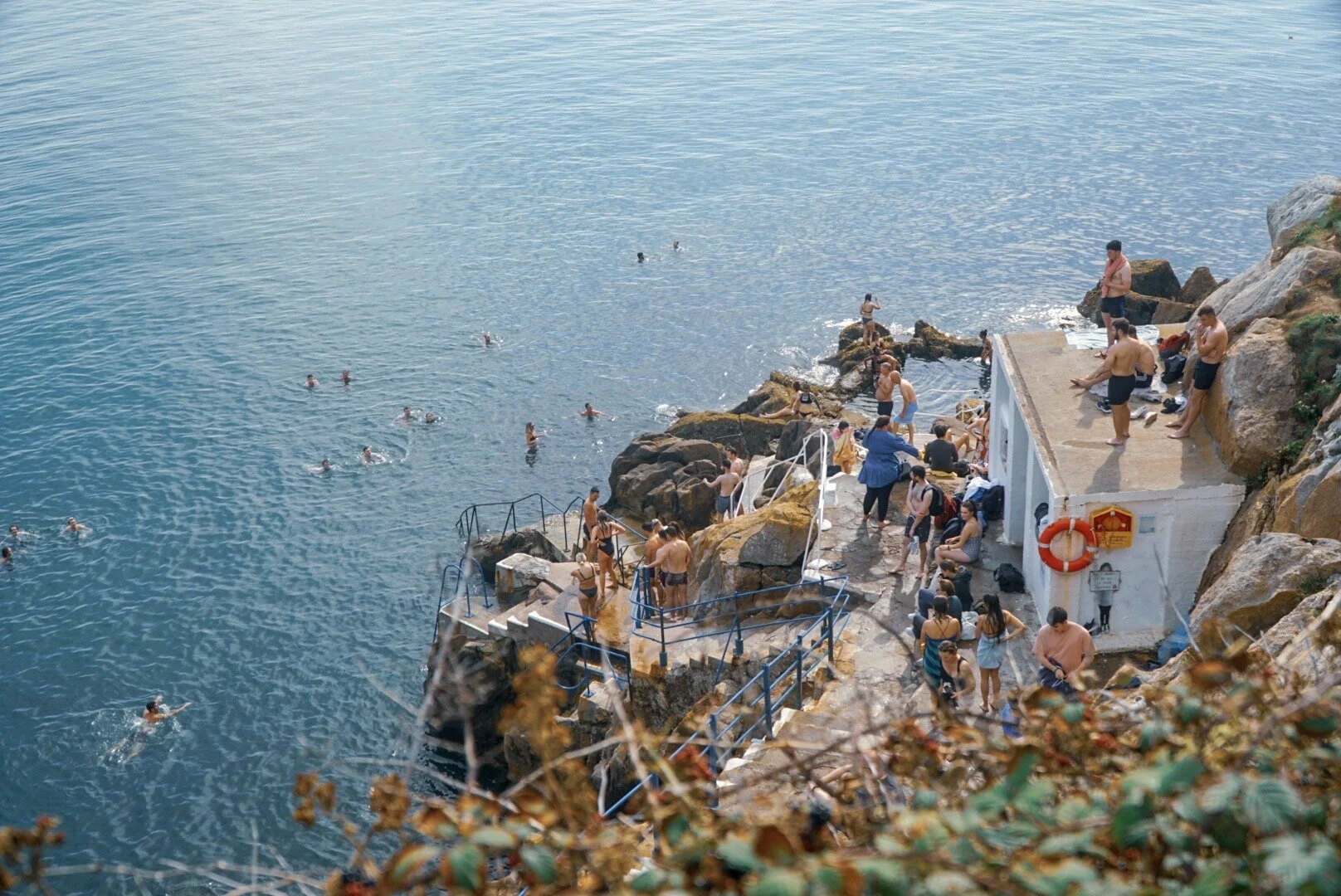
Dún Laoghaire-Rathdown County Council has warned members of the public not to climb over fencing or remove safety barriers to access Vico Baths while repair works continue at the popular south Dublin swimming location.
The bathing spot, officially known as Hawk’s Cliff Swimming Place, was closed to allow essential repairs to damaged access infrastructure. Despite the closure, the council said people had continued entering the active construction area to swim.
Officials warned that ignoring the barriers creates a serious safety risk and could also delay the completion of the work.
The council’s latest published closure notice said Vico Baths was expected to remain closed until the end of June 2026. However, the reopening was dependent on the work being completed, with weather, tides and safe access affecting the timetable. At the time of publication, swimmers were being directed towards Killiney Beach, Sandycove and Seapoint instead.
Vico Baths closure: what the council has said
The council issued a direct reminder asking visitors not to cross, move or climb over the fencing surrounding the site.
According to the notice, people had continued accessing the swimming area even though it was closed and operating as an active construction zone.
The warning stated that entering the site could place swimmers and construction workers at risk.
It could also interfere with ongoing repairs and potentially extend the closure.
The council asked the public to:
- Respect all safety signage
- Keep away from the construction area
- Avoid climbing over fencing
- Not remove or move barriers
- Use alternative swimming locations until the site is officially reopened
The barriers are not intended simply to discourage access. They separate visitors from areas where damaged steps, railings, construction equipment and changing tidal conditions may create hazards.
Why are Vico Baths closed?
Vico Baths were closed to allow essential repair works at Hawk’s Cliff Swimming Place.
The project includes:
- Repairs to the concrete access steps
- Replacement of damaged railings
- Installation of new swimming ladders
- Improvements to the existing sea-access infrastructure
- Work intended to protect the bathing place for future public use
The repairs became necessary following damage to parts of the access route and safety infrastructure.
The swimming area was initially expected to close for approximately 13 weeks from 2 March 2026. The exact completion date was always subject to weather conditions and tidal access because much of the work is being carried out beside the sea.
Why jumping the fence is dangerous
Some swimmers may be familiar with the Vico Baths and believe they can safely reach the water despite the closure.
However, construction sites can change from one day to the next.
A route that appeared usable during a previous visit may contain:
- Loose surfaces
- Unsecured railings
- Open work areas
- Construction materials
- Damaged steps
- Temporary structures
- Slippery surfaces
- Equipment positioned close to the access route
Sea conditions can also change quickly.
Large waves, high tides and slippery rocks can make it difficult to leave the water, particularly where the usual ladders, railings or steps are unavailable.
Entering a closed site may also place emergency responders and construction workers at risk if a rescue becomes necessary.
Could swimmers delay the repair project?
The council has warned that unauthorised access may delay completion of the project.
Construction work near the shoreline already depends on limited windows involving tides, weather and safe working conditions.
When members of the public enter the site, contractors may need to pause work, secure equipment again or check that barriers have not been damaged.
Repeated trespassing can therefore create additional delays at a site where the schedule is already affected by natural conditions.
For regular Vico swimmers, staying away during the closure may be the quickest way to help the location reopen safely.
Is Vico Baths open now?
The most recent official closure notice stated that Hawk’s Cliff, or Vico Baths, would remain closed until the end of June 2026.
The council also explained that the estimated completion date depended on weather and tidal access and that the swimming area would reopen only when the works were complete.
Visitors should not assume the site has reopened simply because the estimated date has passed.
The fencing, safety signage and physical condition of the entrance should be treated as the clearest immediate indication.
Where barriers remain in place, members of the public should not enter.
Alternative swimming locations near Vico Baths
Dún Laoghaire-Rathdown County Council identified three nearby alternatives for people seeking a sea swim while Vico Baths remain unavailable:
- Killiney Beach
- Sandycove
- Seapoint
Each location offers a different swimming experience, and swimmers should still check weather, tides and bathing-water information before entering the sea.
Killiney Beach
Killiney Beach is one of the closest alternatives to Vico Baths.
The long, stony beach provides access to the sea with views across Killiney Bay.
It can suit swimmers who prefer a beach entry rather than climbing down steps into deeper water.
However, conditions can vary significantly.
Swimmers should be aware of:
- Waves
- Currents
- Steep changes in water depth
- Slippery stones
- Cold-water shock
- Limited shelter during rough weather
Footwear suitable for stones may make entering and leaving the water more comfortable.
Sandycove
Sandycove is another well-established swimming area on the south Dublin coast.
The area is particularly popular with regular sea swimmers and is close to the Forty Foot.
It can become extremely busy during warm weather, weekends and early mornings.
Visitors should avoid blocking local access and should respect nearby residents.
As with any coastal location, swimmers need to check sea conditions before entering.
Familiarity with a location does not remove the dangers associated with cold water, waves or changing weather.
Seapoint
Seapoint is a designated bathing location with easy access from the DART and nearby residential areas.
It is popular with swimmers of different experience levels, although conditions can change depending on the tide.
At lower tides, the entry may be shallow and rocky.
At higher tides, access can be easier, but swimmers should still watch for slippery surfaces and marine growth around steps and walls.
The area may become crowded during hot weather, so visitors should allow space for others entering and leaving the water.
Is the Éire sign area still accessible?
During the repair project, access to the grass area around the historic Éire sign was expected to remain open.
The closure applies to the swimming-access area and the parts of Hawk’s Cliff affected by the construction works.
Visitors using the upper area should still respect fencing and avoid attempting to enter the closed route leading towards the water.
What work is being completed at Hawk’s Cliff?
The project is focused on making access safer and improving the long-term condition of the site.
Concrete step repairs
The steps leading towards the swimming area are exposed to salt water, storms, rain and heavy footfall.
Over time, concrete can crack or deteriorate.
Repairs are intended to restore the access route and reduce the risk of unstable surfaces.
Replacement railings
Railings are essential at a steep coastal site.
They provide support on wet steps and help guide swimmers safely towards the water.
Damaged or weakened railings cannot provide reliable protection and must be repaired or replaced.
New swimming ladders
New ladders are being installed to improve entry to and exit from the sea.
Reliable ladders are particularly important when tides are high or when swimmers need to leave the water quickly.
Until the new ladders are fully installed and approved for use, swimmers should not attempt to improvise another exit route.
Why coastal repairs can take longer than expected
Repairing a coastal swimming area is more complicated than working at an ordinary public park or roadside site.
Contractors may only be able to complete certain tasks during suitable tides.
Strong winds, waves or heavy rain can make work unsafe.
Materials must also be capable of withstanding:
- Saltwater corrosion
- Winter storms
- Repeated wave impact
- Changing temperatures
- Heavy public use
Even where most visible work appears complete, inspections and safety checks may still be required before the site can reopen.
Vico Baths remain one of Dublin’s most popular swimming locations
The Vico Baths have become one of the best-known sea-swimming locations in Dublin.
Located beneath Vico Road between Dalkey and Killiney, the swimming area is reached by a steep path leading down towards the Irish Sea.
It is popular throughout the year, including during winter when experienced cold-water swimmers continue using the location.
Its appeal comes from:
- Dramatic views across Killiney Bay
- Deep-water access
- Sheltered sections around the rocks
- Its long association with local sea swimming
- The surrounding cliffs and coastal landscape
- Its proximity to Dalkey and Killiney
That popularity also makes managing a temporary closure more difficult.
Many visitors have established routines at the site and may be reluctant to use another location.
The council’s warning makes clear that familiarity does not justify entering an active construction area.
Why people continue trying to access the site
The closure has taken place during a period when sea swimming remains extremely popular in Dublin.
Warm weather can bring large numbers of casual swimmers to the coast, while regular swimmers may visit the same location every morning throughout the year.
Some people may also arrive without knowing about the closure until they reach the entrance.
Others may believe the work looks nearly complete and decide that accessing the site is harmless.
The council has stressed that the closure remains in force until the area is formally reopened.
Members of the public should not make their own assessment about whether the construction zone is safe.
Sea-swimming safety during warm weather
Sunny conditions can create the impression that the sea is safe, but water temperatures around Ireland remain cold even during summer.
Cold-water shock can affect breathing and movement immediately after entering the water.
Swimmers should:
- Enter gradually
- Avoid jumping into unfamiliar water
- Swim with another person
- Check tides and weather
- Wear a brightly coloured swimming cap
- Use a tow float where appropriate
- Remain close to a safe exit
- Avoid swimming after consuming alcohol
- Leave the water before becoming excessively cold
- Tell someone where they are going
People should never climb barriers or enter through a closed construction area to reach the sea.
Why jumping from rocks can be dangerous
The Vico area includes rocks, ledges and deep-water access points.
Although some experienced swimmers may be familiar with local depths, underwater conditions can change.
Tides can affect the depth beneath a jumping point, while debris or submerged rocks may not be visible from above.
Jumping can cause:
- Head injuries
- Spinal injuries
- Broken bones
- Cuts
- Loss of consciousness
- Difficulty exiting the water
A construction closure may introduce additional underwater or shoreline hazards.
No one should jump from the site while access remains restricted.
Respecting local residents
The roads around Vico Baths and Hawk’s Cliff run through residential areas.
Visitors should avoid:
- Blocking driveways
- Parking on narrow roads
- Leaving rubbish
- Creating excessive noise
- Damaging barriers
- Entering private property
- Obstructing emergency access
Using an alternative swimming location can help reduce pressure on the area while repairs continue.
What should visitors do if they arrive and find the site closed?
Anyone arriving at Vico Baths while barriers remain in place should turn back and choose another swimming location.
The safest response is:
- Do not climb over the fencing.
- Do not move barriers.
- Do not follow others into the closed area.
- Check conditions at an approved nearby location.
- Report damaged fencing where necessary.
- Wait for an official reopening announcement.
Seeing another person inside the site does not mean access is permitted.
What happens if someone ignores the closure?
Entering a closed construction site may amount to trespassing and can expose the individual to serious physical danger.
It can also create complications involving public liability, emergency rescue and the safe operation of the work site.
The most important issue is safety.
A person injured within the restricted area may be difficult to reach, especially if the normal steps or ladders are unavailable.
Council asks swimmers for patience
The repair work is intended to improve Vico Baths rather than restrict access permanently.
The upgraded steps, railings and ladders should create safer access once the project is complete.
The council’s message is that a temporary period of inconvenience is necessary to protect swimmers and preserve the bathing place.
By respecting the closure, the public can help contractors finish the work without unnecessary interruptions.
Frequently asked questions
Why are Vico Baths closed?
The swimming area is closed for essential repairs to the concrete access steps, damaged railings and sea-access ladders.
Can people climb over the fence to swim?
No. The council has asked the public not to climb over or remove fencing and barriers.
Why is it dangerous?
The area is an active construction site with damaged and unfinished access infrastructure.
When will Vico Baths reopen?
The latest official estimate was the end of June 2026, but completion depended on weather, tides and the work being safely finished.
Is Vico Baths also called Hawk’s Cliff?
Yes. The official name used by the council is Hawk’s Cliff Swimming Place, while it is widely known as Vico Baths.
What swimming locations can people use instead?
The council recommended Killiney Beach, Sandycove and Seapoint.
Is Killiney Beach near Vico Baths?
Yes. Killiney Beach is one of the closest alternative sea-swimming locations.
Can visitors still access the Éire sign?
The upper grass area near the Éire sign was expected to remain accessible, but visitors must not enter the closed swimming route.
What repairs are being carried out?
The project includes concrete step repairs, replacement railings and new swimming ladders.
Can swimmers enter if no workers are present?
No. The closure applies whether or not construction workers are visible at the time.
Could trespassing delay reopening?
Yes. The council warned that unauthorised access creates safety risks and may delay the project.
Public urged to wait for official reopening
Vico Baths remain an important part of Dublin’s sea-swimming culture, and the closure will be frustrating for regular users during the warmer months.
However, the council has made clear that fencing and barriers must be respected.
The repairs involve essential safety infrastructure, including the steps, railings and ladders used by swimmers entering and leaving the water.
Until the site is formally reopened, people should not climb the fence, remove barriers or enter the construction zone.
Killiney Beach, Sandycove and Seapoint remain the council’s suggested alternatives for anyone looking for a nearby swim.
Waiting for the work to be completed is not only safer. It may also help ensure that Vico Baths can reopen without further delay.