


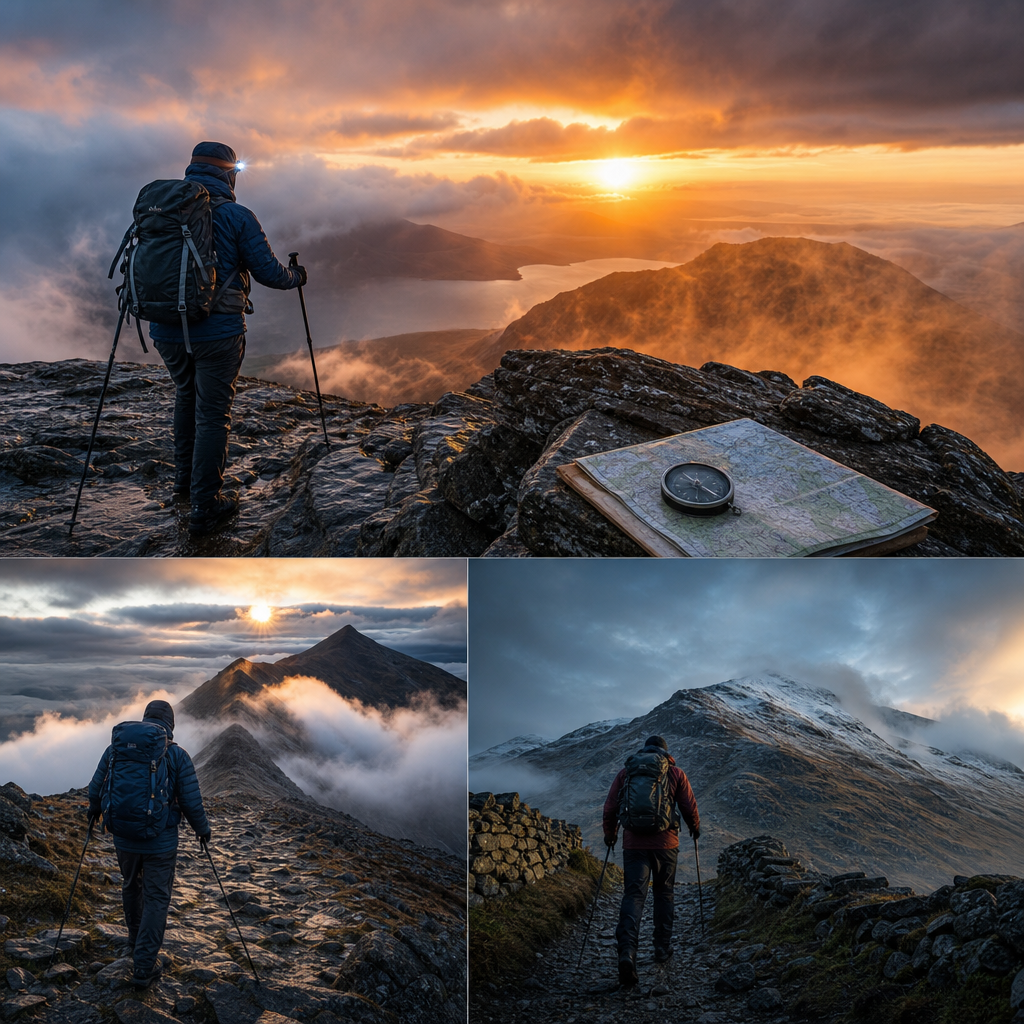
The Princess of Wales has completed the demanding Three Peaks Challenge in under 24 hours, drawing fresh attention to one of the UK’s toughest endurance tests. While this is not breaking news ireland in the traditional sense, the achievement is already sparking interest among outdoor enthusiasts searching for practical advice, fitness preparation and mountain safety guidance.
According to reports, the Princess began the challenge on Saturday evening and successfully climbed Ben Nevis in Scotland, Scafell Pike in England and Snowdon in Wales before the 24-hour window closed. She is understood to have taken on the route with support from Mountain Rescue and completed the trek in aid of the Royal Marsden Cancer Charity.
The Three Peaks Challenge covers the highest mountains in Scotland, England and Wales, and while the walking distances are significant, experienced organisers say stamina, pacing and planning matter just as much as raw fitness. For readers following ireland news today, travel features and outdoor lifestyle trends, the challenge offers useful lessons in preparation, safety and resilience.
How to prepare for the Three Peaks Challenge
Adventure specialists say the biggest mistake beginners make is underestimating how long they will be on their feet. You do not need elite athletic ability, but you do need enough endurance to keep moving over a full day of climbing, transfers and recovery.
Build stamina gradually
Preparation should begin well before the event. Long walks, hill training and cycling sessions can all help improve endurance. The aim is to condition your legs, lungs and energy levels for sustained effort rather than short bursts of speed.
- Start with regular long-distance walks
- Add hill sessions to mimic climbing conditions
- Include cycling or low-impact cardio for stamina
- Practice carrying a loaded backpack
Plan the route carefully
The classic version of the challenge is often completed from north to south: Ben Nevis first, followed by Scafell Pike, and finishing at Snowdon. Organisers commonly allow roughly 10 hours for driving and divide climbing time across the three peaks.
For most groups, the best months are between May and October, when daylight and conditions are generally more favourable. Even then, mountain weather can change fast.
Essential safety tips before you climb
Do not rely only on your phone
Mobile signal can be unreliable in mountainous areas. Walkers are strongly advised to carry a physical map, compass and have at least one person in the group who can navigate properly, especially on night sections or in fog.
Use a separate driving team
One of the clearest pieces of expert advice is not to combine walking and driving if it can be avoided. Fatigue after a mountain ascent can make long transfers dangerous. A dedicated driving team improves safety and gives hikers a better chance of recovering between peaks.
Pace yourself from the start
Setting off too fast on the first ascent can ruin the rest of the challenge. A slower opening pace often leads to a stronger overall finish. Since the event lasts up to 24 hours, energy management is crucial.
What to pack for the Three Peaks Challenge
Conditions on the mountains can swing from warm and dry to cold, wet and windy in a short time. That makes clothing and kit selection vital.
- Worn-in hiking boots with ankle support
- Waterproof outer layer
- Multiple base layers and spare clothing
- Walking trousers or convertible trousers
- Hat and gloves
- Head torch for night hiking
- 25 to 30-litre rucksack
- Hydration pack or efficient drinking system
- Walking poles for balance and reduced knee strain
Experts also recommend starting in lighter layers and adjusting as your body warms up. Once clothing becomes damp with sweat, spare dry layers can make a major difference to comfort and morale.
Food, teamwork and mindset matter
Nutrition plays a major role in completing the challenge. Carbohydrate-rich meals before the trek, a balanced breakfast, and quick energy foods during the climbs can help maintain output. Protein snacks and hydration should also be part of the plan.
Perhaps just as important is the group dynamic. Even strong walkers can struggle during overnight climbs, bad weather or steep descents. Good teamwork, encouragement and a shared purpose often become the deciding factors.
In this case, the charitable motivation behind the Princess of Wales’s effort added a powerful layer of meaning. For many who take on the Three Peaks Challenge, fundraising provides the mental edge needed to push through difficult moments.
FAQs about the Three Peaks Challenge
How long does the Three Peaks Challenge take?
The standard goal is to complete the three climbs and all travel between them within 24 hours.
What mountains are included?
Ben Nevis, Scafell Pike and Snowdon are the three peaks involved.
Is it suitable for beginners?
It can be, but only with proper training, realistic expectations and attention to safety.
What is the biggest risk?
Fatigue, poor navigation, unsuitable footwear and rapidly changing weather are among the biggest hazards.
The Princess of Wales’s successful effort has put a spotlight on an iconic mountain challenge that demands planning as much as determination. For readers browsing breaking news ireland, travel inspiration and real-world endurance stories, the key takeaway is simple: with the right preparation, pacing and support, the Three Peaks Challenge becomes a serious but achievable test.