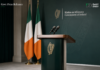
Breaking News from Brussels and Dublin: Ireland has taken over the Presidency of the Council of the European Union at a moment of unusual political and economic strain. The six-month role places the Irish Government at the centre of negotiations on major EU files, including technology regulation, competitiveness, research policy and the bloc’s wider response to mounting geopolitical pressure.
Ireland’s presidency is being watched closely because it begins as relations between the European Union and the United States remain tense, especially on digital policy. For Irish readers, the significance goes beyond diplomacy: decisions shaped during this period could influence jobs, investment, regulation, innovation and Ireland’s standing inside the EU.
What Ireland’s EU Presidency Means
The rotating presidency of the Council of the European Union gives Ireland responsibility for chairing meetings of member states, guiding legislative talks and helping broker agreement between national governments, the European Parliament and the European Commission. It does not allow Dublin to push a purely national agenda. Instead, the expectation is that Ireland acts as a neutral facilitator while still bringing political skill and urgency to difficult negotiations.
This is why the role matters so much. At a time when the EU is trying to sharpen its industrial strategy and reduce strategic dependence in areas such as semiconductors, cloud computing and artificial intelligence, the country in the chair can influence pace, priorities and the chances of compromise.
Further and Higher Education Minister James Lawless has indicated that Ireland understands the importance of that neutral role, while also backing stronger European cooperation in research and innovation. His remarks reflect a wider Irish position: support for EU coordination, but also sensitivity to the reality that many major US technology firms have substantial operations in Ireland.
Why Expectations Are So High
EU Commissioner Ekaterina Zaharieva said there are “high expectations” for the Irish presidency, underlining confidence that Ireland can steer discussions at what she described as a decisive moment. That confidence is tied to Ireland’s reputation as one of the EU’s more strongly pro-European member states and to its experience in balancing national interests with broader European priorities.
The challenge is that this presidency begins during a particularly delicate phase in transatlantic relations. Former minister for European affairs Lucinda Creighton has warned that Ireland may come under pressure from both Washington and Brussels as digital regulation, tax disputes and strategic technology policy collide.
Key areas likely to define the term include:
- EU technology sovereignty measures
- Artificial intelligence and advanced computing policy
- Cloud market regulation under EU competition rules
- Research and innovation investment
- Industrial competitiveness across the bloc
- Trade friction with the United States
For anyone following Ireland News, this is one of the most important policy stories of the year because it connects foreign affairs directly to the domestic economy.
Tech Policy Sits at the Heart of the Story
Much of the attention around the presidency centres on technology. The European Commission has been advancing a broader push for what it calls technological sovereignty, with measures aimed at strengthening Europe’s capacity in semiconductors, AI, cloud infrastructure and open-source systems. The underlying concern is that Europe remains too reliant on external providers for critical technologies that support vital services and infrastructure.
That agenda has become more politically sensitive because several leading US tech companies maintain major headquarters or significant operations in Ireland. Those firms are also deeply important to the Irish tax base and employment landscape. This creates a complex backdrop for the presidency: Ireland must chair discussions fairly while operating in a policy area where it has real economic exposure.
The debate has also sharpened because of US criticism of EU digital rules, including the Digital Services Act, and wider concern in Washington about how Brussels regulates large technology companies. Reports of possible tariff threats linked to digital services disputes have added another layer of uncertainty.
For readers tracking Irish Technology News, AI News Ireland and Business News Ireland, this is where the presidency could have practical consequences. Faster movement on EU tech legislation could shape investment decisions, compliance costs and Ireland’s competitive position in the European digital economy.
Why Ireland’s Position Is Unusual
Ireland is not just another member state in this debate. It has strong economic links with the US, a major multinational presence, and a clear interest in preserving an open investment climate. At the same time, it is expected to help the EU move ahead with legislation designed to assert more control over key sectors and strategic capabilities.
That balancing act is likely to define much of the Irish presidency.
Confirmed Meetings and Early Signals
Ireland has already hosted informal gatherings involving EU policymakers, including meetings focused on research and innovation in Dublin. These events are early signals of the themes Dublin wants to emphasise: scientific cooperation, advanced technology, industrial capacity and faster delivery of policy to businesses, universities and public stakeholders.
Zaharieva’s intervention also highlighted a recurring EU concern: speed. In Brussels, there is often less disagreement about the need for action than about how quickly complex rules can be agreed and implemented. Ireland’s ability to manage negotiations efficiently may become one of the clearest measures of success.
That matters because delayed decisions on innovation funding, AI systems, cloud competition and computing infrastructure can affect how quickly Europe responds to rivals in the US and Asia.
What This Means for Ireland
For the public, this may sound like distant EU process. It is not. The presidency touches several issues that matter at home:
- Jobs: Ireland’s role in the European tech ecosystem supports employment across multinational and domestic sectors.
- Investment: Regulatory certainty matters to companies choosing where to expand.
- Research funding: Universities and innovation centres benefit from stronger EU cooperation.
- Political influence: A well-run presidency can strengthen Ireland’s credibility inside the union.
- Economic resilience: EU efforts to diversify technology supply chains could reduce long-term risk.
In Latest News Ireland, the story is not only about diplomacy but about how the Irish state navigates a high-stakes moment where geopolitics, regulation and economic strategy overlap.
What Happens Next
Over the coming months, Ireland will chair negotiations across a range of EU policy files. Attention will focus on whether Dublin can maintain credibility as an honest broker while helping the bloc make progress on competitiveness and strategic technology goals.
The main questions now are straightforward:
- Can Ireland keep talks moving at speed?
- Can it manage pressure from competing EU and US interests?
- Can it help secure practical progress on innovation and digital policy?
- Can it do so without undermining confidence in its neutrality?
The answers will shape not just Ireland’s reputation, but the direction of EU policy during a volatile period.
FAQ: Ireland’s EU Presidency
What happened?
Ireland has assumed the rotating Presidency of the Council of the European Union and will chair negotiations and meetings on key EU issues for the remainder of its term.
Why is it significant?
The presidency begins during heightened geopolitical tension, especially around technology policy, EU competitiveness and transatlantic trade relations.
Who is affected?
EU member states, policymakers, businesses, researchers, technology firms and Irish sectors linked to foreign investment and innovation all have a stake in the outcome.
What will Ireland focus on?
Early indications point to research, innovation, AI, cloud policy, strategic technology capacity and faster progress on EU legislative priorities.
Breaking News Takeaway
This Breaking News story matters because Ireland is stepping into a powerful EU role at a time when technology, trade and geopolitics are colliding. If Dublin can combine neutrality with effective leadership, the Irish presidency could strengthen both Europe’s policy response and Ireland’s influence at the heart of the union.