


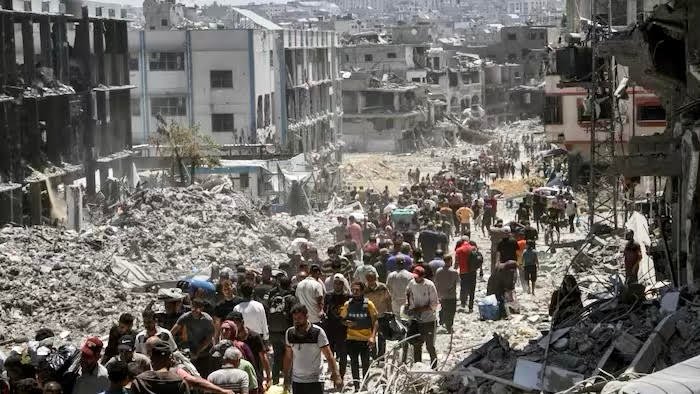
A fresh political row has erupted in Dublin news after Sinn Féin MEP Lynn Boylan criticised the European Commission for refusing to release documents linked to the destruction of EU-funded infrastructure in Gaza. The dispute has intensified calls for transparency over how public money is being spent, damaged, and accounted for in conflict zones.
Boylan, who chairs the European Parliament Delegation for Relations with Palestine, said the refusal to disclose records raises serious questions about accountability. Her remarks follow reporting that infrastructure funded by the European Union in Gaza and the West Bank has suffered extensive destruction, with estimates putting the value of damaged or destroyed assets at no less than €150 million.
Why the document dispute matters in Dublin news
The issue has moved beyond foreign policy and into broader public accountability. For Irish readers following Dublin news, the controversy touches on a simple question: if taxpayer-funded projects are destroyed, should the EU fully disclose the scale of the loss and what action it plans to take?
Boylan argued that withholding the documents undermines trust in European institutions. She said the public has a right to know:
- What EU-funded infrastructure was damaged or destroyed
- How much money has effectively been lost
- Whether any compensation or recovery process has been pursued
- Why the relevant records are not being made public
Her criticism also reflects a wider concern in Dublin business and policy circles about how institutions safeguard public investment abroad.
Boylan calls for stronger EU action
According to Boylan, the Commission should move past statements of concern and adopt direct financial consequences if infrastructure funded by the EU is destroyed. She has argued that if repayment is not voluntarily made, the EU should consider recovering the value through other funding channels involving Israel.
The MEP also pointed to recent international findings that have further intensified scrutiny of the conflict and the humanitarian cost in Gaza. In that context, she said transparency is not optional but essential.
For many observers, this is not only a diplomatic issue but a governance issue. In practical terms, transparency over public spending affects confidence in European oversight, especially when the sums involved are so significant.
What happens next?
The debate is likely to continue at both EU and Irish political levels. Key questions remain over whether the Commission will reverse its position, whether more records will emerge through further investigations, and whether Irish representatives will push for a firmer response.
As this story develops, it may become a notable part of Dublin news coverage because it combines international conflict, Irish political reaction, and concerns over taxpayer accountability.
Read more
Explore more
The bigger takeaway for Dublin readers
This latest Dublin news story highlights how international events can quickly become local political issues when public funds and democratic accountability are involved. Boylan’s intervention places pressure on the European Commission to explain what it knows, what it is withholding, and what consequences may follow.
For readers tracking Dublin news and Dublin business developments, the central issue is clear: transparency over public money is not a side matter. It is fundamental to public trust.
Article/Image Courtesy: Dublin People