


History gets repeated so often that half-truths can start to sound like facts. This daily trending topic takes a closer look at some of the most common historical myths people still believe, and why the real stories are often far more interesting than the legends.
From Cleopatra and Napoleon to Columbus and NASA, popular culture has helped cement plenty of misconceptions. Below, we unpack 18 famous myths, explain what historians generally say instead, and show how easily simplified stories can reshape public memory.
Daily Trending Topic: 18 historical myths worth rethinking
1. Knights in plate armour were not slow-moving tanks
Modern films and games often depict armoured knights as barely able to move. In reality, well-made plate armour was fitted to the wearer and distributed weight across the body, making it more practical than many people assume. By contrast, chainmail could place more strain on the shoulders and arms.
2. Cleopatra was famed more for intellect than beauty
The idea of Cleopatra as an irresistible enchantress became exaggerated over time. Ancient writers were often more struck by her political skill, charisma, intelligence and command of power than by unmatched physical beauty.
3. Cleopatra was not ethnically Egyptian
Another major myth is that Cleopatra was Egyptian by ancestry. She belonged to the Ptolemaic dynasty, a ruling family of Macedonian Greek origin descended from one of Alexander the Great’s generals. Her significance partly came from embracing Egyptian language and culture more than many of her predecessors did.
4. Marie Antoinette likely never said “Let them eat cake”
This famous quote is widely linked to the French queen, but historians have long questioned that attribution. The phrase appears in earlier writing and was probably attached to her later as a symbol of royal indifference.
Read more: DailyDigest.ie | MediaDigest.ie
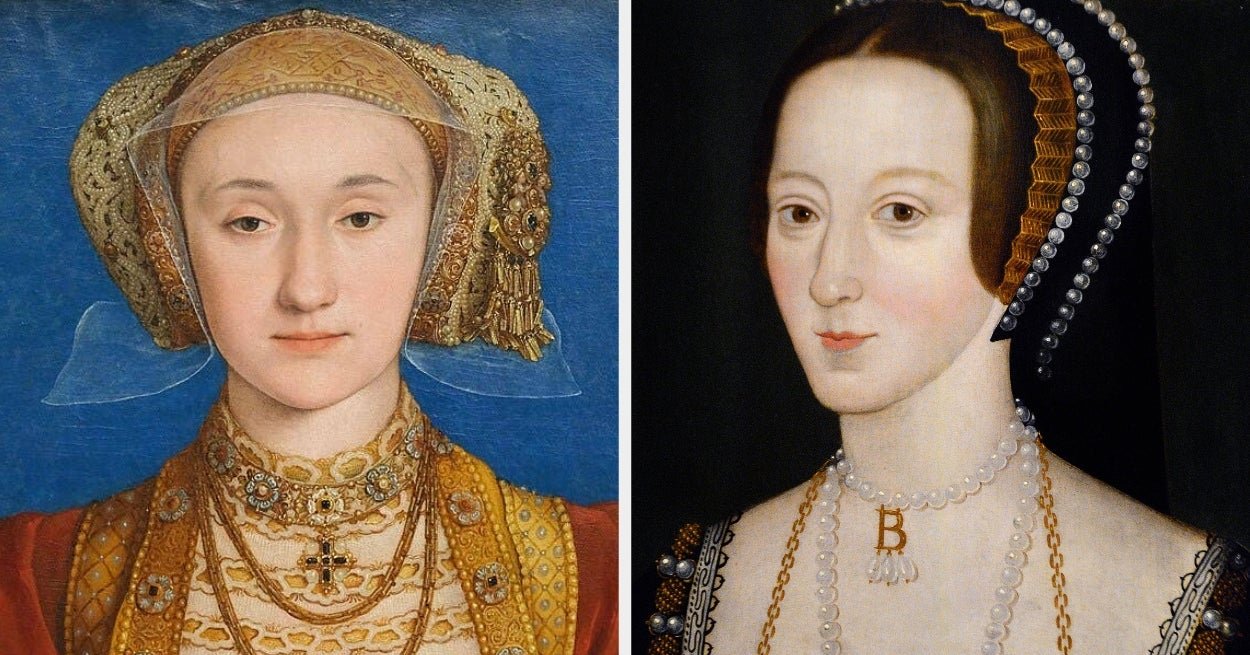
5. Henry VIII did not reject Anne of Cleves simply because she was “ugly”
The story that Henry VIII felt tricked by a flattering portrait is likely oversimplified. Historians suggest their awkward first meeting, court politics and Henry’s bruised ego may have played a larger role than appearance alone.
6. NASA did not foolishly waste millions on a space pen
The popular comparison goes: Americans made an expensive pen, Russians used pencils. But pencils posed genuine risks in spacecraft, including floating graphite particles and fire hazards. Also, the pen was developed privately by Fisher before being purchased by both NASA and the Soviets.
7. The Roman Empire did not simply “fall” overnight in 476 CE
While 476 is a useful date in textbooks, the transition from Roman rule in the West was gradual and uneven. Social, military and economic changes had been unfolding for generations, while the Eastern Roman Empire continued for nearly another thousand years.
8. Nero probably did not fiddle while Rome burned
This image is memorable, but likely false. Reports suggest Nero was away from Rome when the Great Fire began and later returned to organise relief and rebuilding efforts. The fiddle itself, of course, did not even exist in ancient Rome.
9. The destruction of the Library of Alexandria did not erase a thousand years of progress
The library’s loss was significant, but the idea that humanity would have reached the moon centuries earlier if it had survived is pure exaggeration. Knowledge in the ancient world was spread across many regions and texts, not stored in one magical vault.
10. Napoleon was not unusually short
This myth survived thanks in part to British propaganda and confusion over French and English measurements. By the standards of his era, Napoleon was around average height.
11. Anne Boleyn probably did not have six fingers
This lurid claim appears to have gained traction after her execution, when political enemies had every reason to demonise her. Most historians treat it as character assassination rather than fact.
12. Corsets were not automatically instruments of torture
Corsets are often portrayed as brutal devices that crushed organs and caused constant fainting. In practice, most were everyday support garments. Extreme tightlacing existed, but it was not the norm for most women.
Explore more: LuxeDigest.org | DailyDigest.ie
13. The American Civil War was not just about “states’ rights”
This remains one of the most persistent myths in popular history. While constitutional arguments were made at the time, the central issue tied to those “rights” was slavery, as shown in secession documents and political speeches from the period.
14. Columbus did not prove the world was round
Educated people in Europe already knew the Earth was round long before Columbus sailed. The real dispute was over geography and distance. Columbus badly underestimated the size of the globe and was fortunate the Americas lay in his path.
15. Romans ruled Britain for a very long time
Many people imagine Roman Britain as a brief episode, but Roman control lasted for centuries — longer than the United States has existed as an independent country.
16. The apple probably did not hit Newton on the head
There is a long-standing story involving an apple and Isaac Newton, but the dramatic version with the fruit striking his head is likely embellishment. The broader point is that observing ordinary events helped inspire big ideas.
17. The Catholic Church was not uniformly anti-science
History here is much more complicated than the stereotype suggests. Religious institutions supported scientific work in many periods, and figures such as Georges Lemaître and Gregor Mendel made foundational contributions to cosmology and genetics.
18. Germany did not singlehandedly start World War I
Germany played a major role in the chain of events that led to war, but the outbreak of WWI came from a web of alliances, militarism, nationalism, imperial rivalry and diplomatic failures across Europe. Simplifying it to one nation alone misses the bigger historical picture.
Why historical myths spread so easily
This daily trending topic also highlights a bigger truth: memorable stories usually beat messy facts. Historical misconceptions survive because they are dramatic, easy to retell and often flattering to national myths, pop culture narratives or political agendas.
- Simple stories are easier to remember than nuanced ones
- Films, TV and social media reward drama over accuracy
- Propaganda can outlive the era that created it
- Schoolbook shortcuts often become “facts” in adulthood
The takeaway from this daily trending topic
If there is one lesson from this daily trending topic, it is that history is rarely as neat as the version most of us first learned. Whether it is Cleopatra’s identity, Columbus’s voyage or the Roman Empire’s decline, the truth is usually more layered, more human and more fascinating.
The next time a historical “fact” sounds too tidy, it is worth digging deeper. Many of the best stories from the past are not the myths we inherit, but the realities we uncover.
Article/Image Courtesy: BuzzFeed