


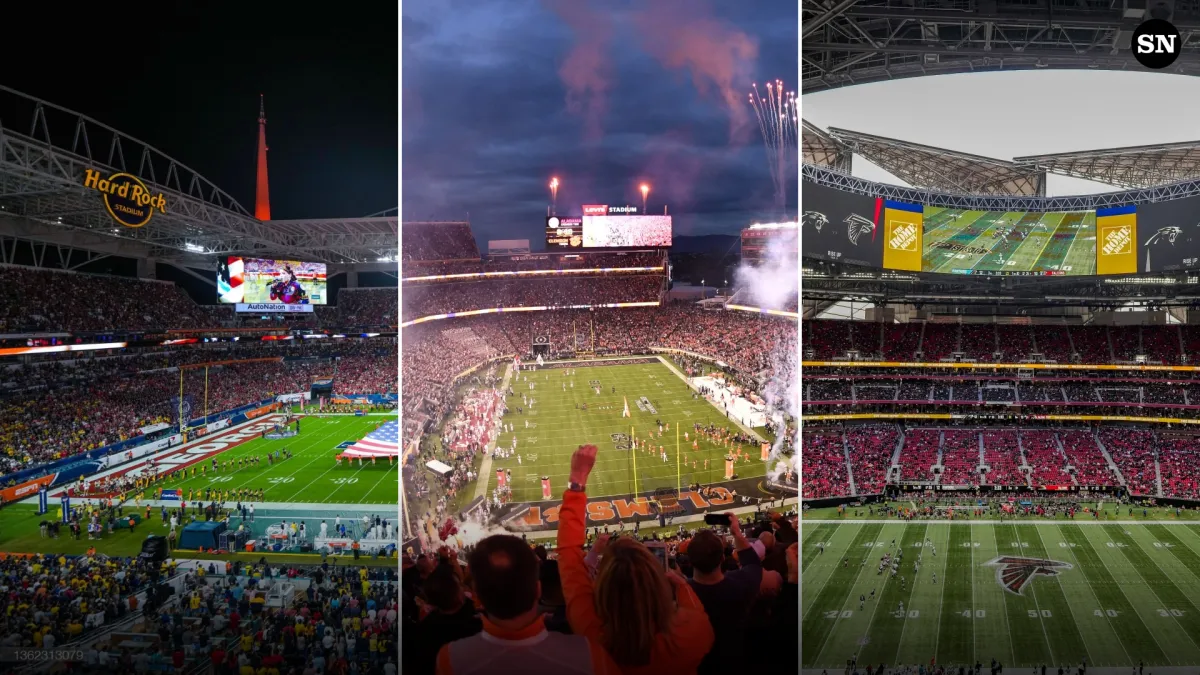
Few things in sport feel bigger than walking into a vast football ground before kickoff. As attention builds toward the FIFA World Cup 2026, the conversation is not only about contenders and calendars, but also about the monumental venues that give the sport its scale, noise and mythology. From Barcelona to Johannesburg and Mexico City, the world’s largest football-specific stadiums remain central to how fans imagine the biggest tournament on earth.
What stands out most is that capacity alone does not define a stadium’s legacy. Some venues are architectural giants; others carry historical weight that far exceeds their size. That distinction matters as supporters track the World Cup 2026, from likely host city atmospheres to the kind of matchday experience fans can expect across North America.
The biggest football stadiums and why they matter for World Cup 2026
The global list of football-first arenas is led by Camp Nou in Barcelona, followed by Johannesburg’s FNB Stadium, Egypt’s Misr Stadium, and London’s Wembley. Each is known not just for scale, but for the role it plays in club and international football. These venues show how the game’s largest settings are built to do more than seat fans — they create pressure, spectacle and identity.
Among them, Estadio Azteca holds a special place in the Football World Cup 2026 narrative. Its current capacity is smaller than the very biggest grounds globally, yet its significance is unmatched. The Mexico City venue is set to become the first stadium to host matches in three separate men’s World Cups, adding another chapter to a history already tied to iconic finals and unforgettable moments.
- Camp Nou remains the largest football-focused stadium by capacity.
- Wembley continues to be one of the most recognisable homes of international football.
- Estadio Azteca blends elite size with rare historical prestige.
- Several of the world’s biggest sports venues are not football stadiums at all, highlighting the sport’s unique relationship with atmosphere rather than sheer scale.
Read more: Latest features and sports analysis
Why Estadio Azteca remains central to the World Cup 2026 story
For fans following the World Cup 2026 host countries, Azteca is one of the easiest venues to identify instantly. It is the largest true soccer stadium in North America and one of the most historically loaded arenas in the sport. Opened in the 1960s, it previously staged World Cup finals in 1970 and 1986, and its place in the upcoming competition gives the tournament a direct link to football heritage.
Altitude also makes the stadium distinctive. Mexico City’s elevation changes the rhythm of matches, influences player recovery and can affect the flight of the ball. That is one reason Azteca has long been viewed as more than just a venue. It is an environment. For supporters planning around the World Cup 2026 venues and potential marquee fixtures, that setting will be one of the most talked-about factors.
Explore: Travel ideas and destination guides
The largest sports venues are not always football homes
One of the more surprising facts for casual fans is that football does not dominate the list of the world’s biggest overall stadiums. Cricket’s Narendra Modi Stadium and several major American college football venues outsize most soccer grounds. Yet football continues to produce the sport’s most emotionally charged spectacles because crowd energy is often shaped by design, history and acoustics rather than raw numbers.
That point becomes relevant when discussing the World Cup 2026 stadiums. A venue does not need to be the biggest on earth to feel iconic. What matters is how the space frames the match, amplifies the supporters and contributes to the occasion.
Read more: Media trends, event coverage and analysis
Historic crowds show football’s unmatched pull
Football’s largest attendances tell their own story. The Maracana, Hampden Park, Salt Lake Stadium and old Wembley all hosted extraordinary crowds in eras when safety rules and ticketing systems were very different. Those numbers may never be repeated, but they reflect the sport’s ability to turn big occasions into cultural events.
As anticipation grows for the World Cup 2026, fans will naturally focus on teams, travel and ticket demand. Still, the venues deserve equal attention. The tournament will unfold across stadiums that are not only functional stages, but symbols of football’s past and future. The clearest takeaway is simple: in a competition defined by moments, the arena often becomes part of the memory itself.
Explore: More news worth following today