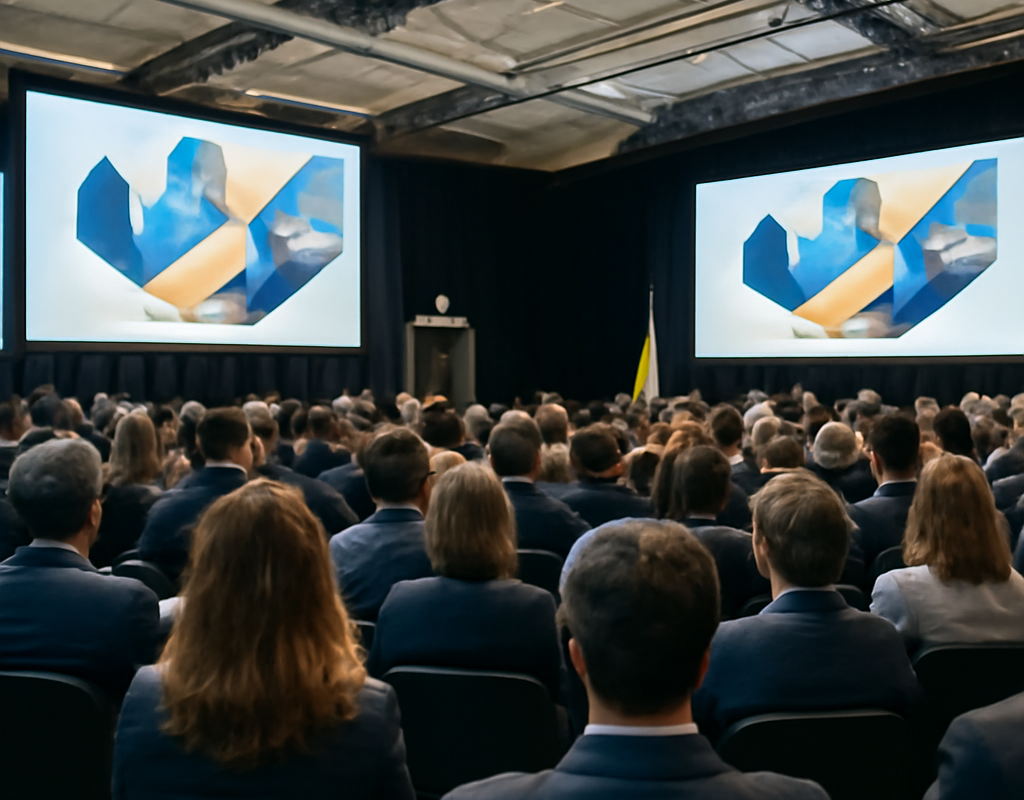
Dublin is taking centre stage in European enterprise policy this week as the SME Assembly Dublin brings together businesses, policymakers, researchers and clustering organisations from across Europe. The event, running from 2 to 4 November 2026, forms part of European SME Week and Ireland’s wider EU Presidency programme.
SME Assembly Dublin puts competitiveness on the agenda
The main conference is being held at the Convention Centre Dublin on 3 and 4 November. Organised around the priorities of competitiveness, the single market, simplification, trade, innovation and business growth, the assembly gives Ireland an opportunity to present its enterprise policy priorities at European level.
Minister for Enterprise, Tourism and Employment Peter Burke is opening the assembly, while Minister of State for Employment, Small Business and Retail Alan Dillon is addressing the opening of the second day. The discussions are expected to focus on the practical challenges facing companies in a complex international environment.
Ireland’s role as presidency host provides a high-profile platform to promote measures that can help firms start, scale and compete. Key themes include:
- Reducing unnecessary complexity for businesses
- Strengthening the European single market
- Supporting digitalisation and innovation
- Building enterprise resilience
- Promoting inclusive entrepreneurship
- Improving opportunities for small and medium-sized businesses to grow
Clusters connect enterprise, research and government
For the first time, the SME Assembly has a joint focus on clusters. The cluster model brings together companies, research and higher-education institutions, and public authorities in areas where organisations can compete while also collaborating.
This “triple helix” approach is intended to build trust, encourage knowledge-sharing and support innovation. The SME Assembly Dublin programme gives cluster organisations, policymakers and third-level research institutions an opportunity to discuss shared challenges and identify potential partnerships.
Enterprise Ireland and IDA Ireland are among the organisations whose work supports Ireland’s wider enterprise and investment ecosystem, while the Department of Enterprise, Tourism and Employment remains central to national policy for business development and employment.
Why the assembly matters to Irish businesses
The event is more than a conference. It creates a networking forum for European Commission representatives, EU Member States, entrepreneurs, business groups and specialist stakeholders. Those connections can support future collaboration, internationalisation and access to expertise for SMEs.
Read more: Ireland’s business and public policy news
Innovation lecture adds to European SME Week programme
Dublin is also hosting the annual Schumpeter “Innovation in Enterprise” Lecture at the Printworks, Dublin Castle, on 3 November. Johanna Mair, Director and Professor of Governance, Institutions and Societal Transformation at the Florence School of Transnational Governance, is delivering this year’s lecture.
The event draws on economist Joseph Schumpeter’s ideas about entrepreneurship, innovation and economic renewal. It invites participants to consider how disruption, social innovation and new business models are shaping Europe’s economy.
Explore more: Irish enterprise and innovation resources
- Explore Irish innovation, investment and enterprise stories
- Find official Irish Government services and announcements
What happens next for European SMEs?
The assembly is designed to ensure that the voice of small businesses informs European discussions on regulation, growth and competitiveness. Its emphasis on simplification, digital transition, collaboration and inclusive entrepreneurship reflects the pressures facing firms across the continent.
By hosting the SME Assembly Dublin, Ireland is using its EU Presidency role to strengthen relationships with European partners and highlight the contribution of SMEs to innovation, jobs and economic development.
Conclusion
The SME Assembly Dublin places Irish enterprise priorities at the heart of a European conversation on how businesses can compete and grow. Its focus on practical cooperation between companies, researchers and governments could help turn shared challenges into new opportunities for innovation and collaboration.
Article/Image Courtesy: gov.ie