


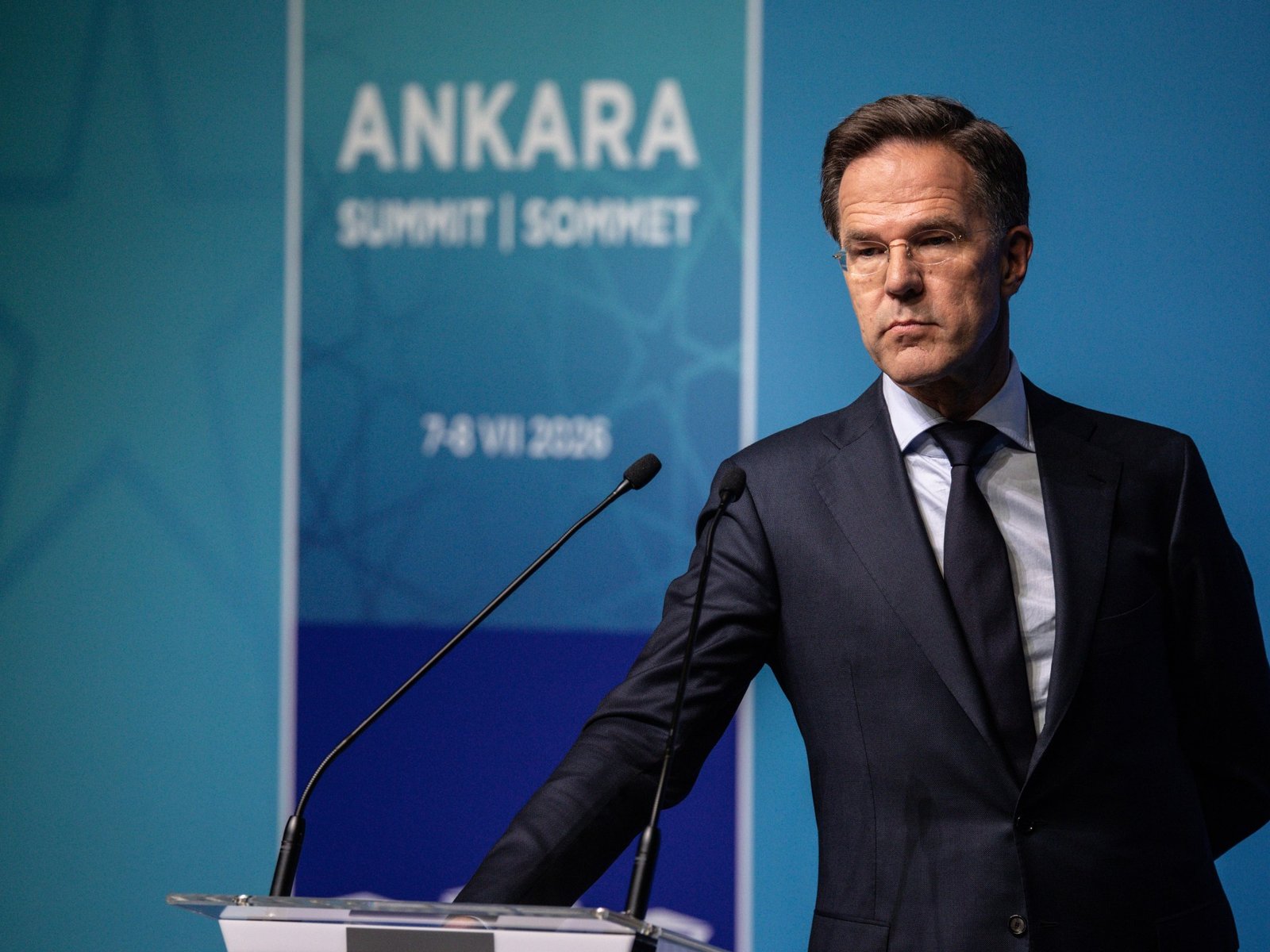
Europe news is being shaped this week by a high-stakes NATO summit in Ankara, where alliance chief Mark Rutte has pressed member states to arrive with firm plans to meet ambitious new defence spending goals. With the United States signalling that Europe must carry more of the security burden, the message from NATO leadership is clear: promises are no longer enough.
Speaking ahead of the two-day summit in Turkiye, Rutte said allies must present “clear, concrete and credible” roadmaps for hitting the alliance’s updated target. The debate comes at a pivotal moment for European security, as the war in Ukraine continues to test military readiness and transatlantic unity.
NATO demands action on defence spending
The central issue dominating this round of Europe news is NATO’s push for all 32 members to show how they will reach the organisation’s latest defence benchmark. Allies agreed last year to aim for spending equal to 5 percent of GDP in total, broken down into:
- 3.5 percent for core military and defence budgets
- 1.5 percent for infrastructure such as roads, bridges and ports that can support military mobility in a crisis
The target marks a major shift from NATO’s previous 2 percent guideline, which some countries still have not fully met. Rutte’s remarks suggest that alliance leaders now want detailed implementation plans rather than broad political commitments.
He also hinted that pressure could increase on those who fail to comply, though he stopped short of explaining what measures might be used against reluctant members.
Why the pressure is rising now
The urgency is tied to Washington’s evolving stance. The US has increasingly called on European allies and Canada to spend more on their own defence, especially as American policymakers question how much of the continent’s security bill the US should continue to shoulder.
US Ambassador to NATO Matthew Whitaker reinforced that position, saying President Donald Trump expects allies to move quickly towards the 5 percent goal. His comments add to wider irish news and international coverage about the future of NATO burden-sharing and whether the alliance can remain united under growing political strain.
Rutte, however, said current spending trends among European allies and Canada are already significant. NATO estimates those countries will invest a combined $258bn more in defence across 2025 and this year than in previous periods, underlining a clear increase in military budgets.
Disagreements remain among member states
Despite momentum, not every ally is fully aligned. Spain has backed NATO’s overall security objectives but argued it can meet alliance requirements without spending at the full 5 percent level. That position reflects a broader concern within some capitals: whether the headline target is economically and politically realistic.
This is one reason the Ankara summit matters so much in Europe news. It is not just about agreeing on principles. It is about testing whether all members will accept the same pace and scale of rearmament.
For countries already under budget pressure, the challenge is substantial. Defence investment at this level means long-term choices on taxation, borrowing, public services and industrial policy. That makes the summit relevant not only to foreign affairs analysts, but also to readers following ireland news, EU policy and broader economic developments.
Read more: latest Ireland breaking news and political updates | in-depth Irish current affairs and Europe analysis
Netherlands to unveil major defence deals
Another significant development from Ankara is the Dutch government’s plan to announce defence agreements and projects worth more than 3 billion euros. Dutch Defence Minister Dilan Yesilgoz said the package would include cooperation with Belgium on air defence and with the United Kingdom on naval vessels.
The Netherlands is also exploring additional joint work with Germany, highlighting a growing emphasis on multinational procurement and regional defence integration. These announcements are designed to demonstrate that spending increases are moving beyond rhetoric and into signed, practical commitments.
That matters because one of NATO’s biggest challenges is not just how much countries spend, but how effectively they spend it. Joint projects can help members avoid duplication, improve interoperability and speed up force readiness.
What this means for European security
The Ankara summit reflects a broader reset in strategic thinking across the continent. Governments are increasingly focused on:
- Rebuilding stockpiles and weapons production
- Improving transport networks for rapid troop movement
- Strengthening air and missile defence
- Deepening cooperation between neighbouring allies
- Reducing overreliance on US military guarantees
These themes are likely to dominate Europe news coverage in the months ahead, especially if the US continues to insist on faster burden-sharing.
Explore more: European lifestyle, diplomacy and global affairs trends | top Ireland news stories with international context
Trump’s loyalty demand adds political tension
The political backdrop to the summit is equally important. Trump has repeatedly criticised NATO members over defence spending and has in the past suggested that allies falling short should not assume automatic US protection. More recently, he has called for “loyalty” from NATO partners, particularly after disagreements over the use of military bases during the US-Israeli conflict with Iran.
Those remarks raise fresh questions about the strength of the transatlantic relationship. For many governments, the issue is no longer theoretical. If confidence in US guarantees weakens, Europe may have to accelerate defence integration much faster than previously planned.
Dutch minister Yesilgoz struck a cautious but hopeful tone, saying she remains confident in continued US engagement because NATO members still need one another.
What to watch next
The key test from Ankara will be whether member states leave with measurable plans, timelines and spending frameworks that NATO can track. If they do, the summit may mark a turning point in the alliance’s post-Cold War evolution. If not, pressure from Washington is likely to intensify.
For anyone following Europe news, this summit is about more than budgets. It is about whether NATO can adapt to a new era of insecurity, political pressure and shifting power balances. The clearest takeaway is simple: Europe is being asked to pay more, plan faster and prove it can defend itself with greater urgency than ever before.
FAQs
What is NATO’s new defence spending target?
NATO members agreed to aim for total spending equal to 5 percent of GDP, including 3.5 percent on defence budgets and 1.5 percent on supporting infrastructure.
Why is the Ankara summit important?
The summit is important because NATO wants allies to submit concrete plans, not just verbal commitments, for meeting the new target.
Which countries are announcing new defence commitments?
The Netherlands has said it will unveil defence plans and deals worth more than 3 billion euros, including cooperation with Belgium and the UK.
Why is the US pushing allies to spend more?
Washington argues that European allies should take on a larger share of the alliance’s security costs, especially as US strategic priorities evolve.