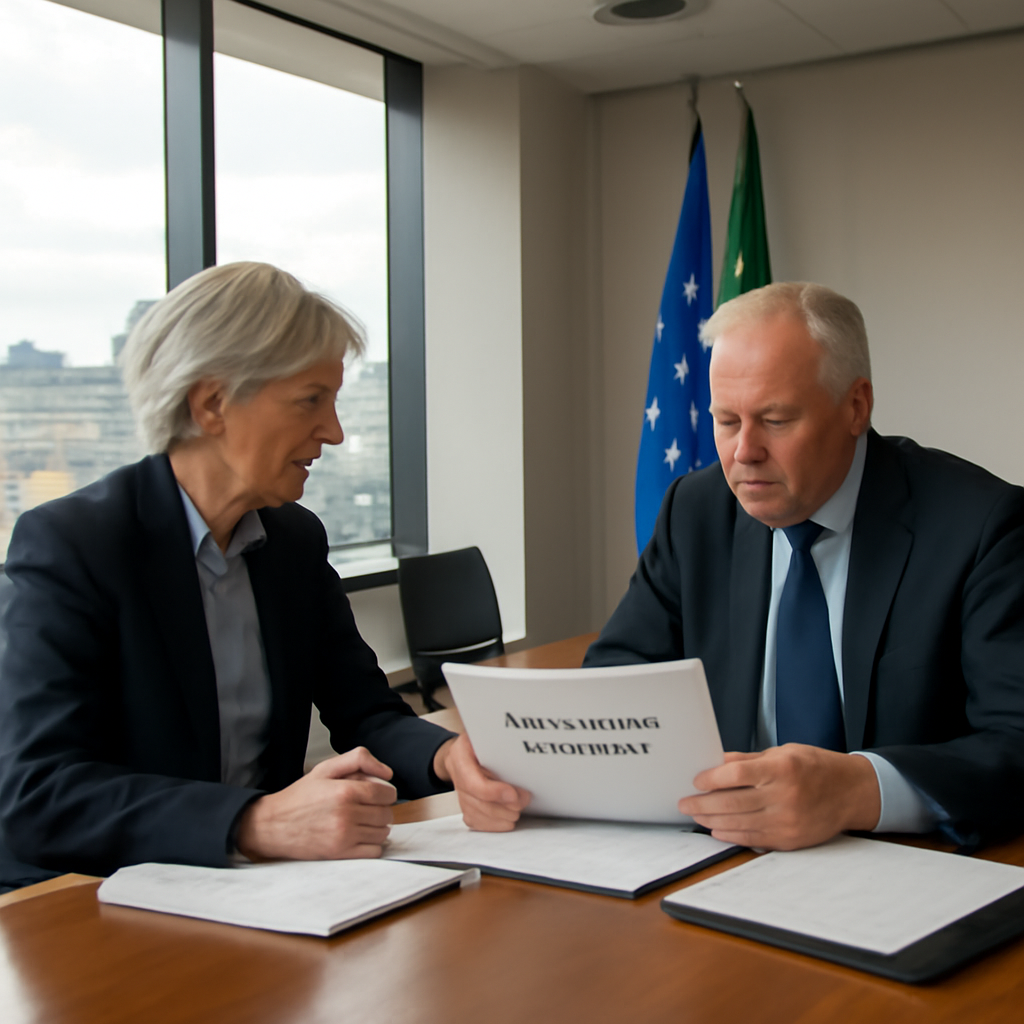
Ireland is placing implementation and international cooperation at the centre of its climate diplomacy ahead of COP31 in Türkiye. On 28 September 2026, Minister for Climate, Energy and the Environment Darragh O’Brien met EU Commissioner for Climate, Net Zero and Clean Growth Wopke Hoekstra in Dublin to discuss the priorities facing the EU and Ireland’s Presidency of the Council of the European Union.
The meeting comes as Ireland works with European partners on climate policy files and preparations for the United Nations climate conference in November. The discussions highlighted the importance of delivering measurable results rather than focusing solely on the wording of negotiating texts.
COP31 climate priorities agreed by Ireland and the EU
Minister O’Brien and Commissioner Hoekstra identified five central themes for the EU and Irish Presidency approach to COP31:
- Implementation: turning existing climate commitments into practical action.
- The Paris Agreement: maintaining the agreement as the central framework for global climate cooperation.
- Multilateralism: strengthening collaboration between countries and international institutions.
- Cumulative progress: recognising that advances are built across successive COP meetings.
- Clean electrification: accelerating the shift to clean electricity for climate, energy security and competitiveness.
The priorities reflect a focus on delivering existing promises while continuing to develop stronger international partnerships. They also connect climate policy with energy resilience and economic performance.
Ireland’s role in EU climate policy
The Department of Climate, Energy and the Environment said the meeting addressed key climate files progressing during Ireland’s Presidency. Among the issues discussed were negotiations connected with the EU Emissions Trading System, commonly known as ETS, as well as preparations for COP31.
Minister O’Brien described COP31 as an “implementation COP”, arguing that international progress should be judged by real-world impacts achieved over time. Commissioner Hoekstra similarly emphasised the need to convert commitments into concrete progress, rebuild trust and uphold scientific standards.
Why clean electrification is a key COP31 issue
Clean electrification is expected to remain an important part of global climate discussions because it links emissions reduction with energy security. Expanding renewable and low-carbon electricity can support cleaner transport, industry and heating while reducing exposure to fossil-fuel price volatility.
For the EU, this agenda also relates to competitiveness. Investment in clean energy infrastructure, grid capacity and innovative technologies could help economies meet climate targets while supporting long-term industrial development.
What happens next before COP31?
Ireland and the EU will continue diplomatic engagement with international partners in the run-up to the conference. The stated approach combines ambition with practical delivery, including progress on existing agreements, constructive cooperation and faster deployment of clean electricity.
The meeting also reinforces Ireland’s role in coordinating European priorities during its Council Presidency. Its success will ultimately depend on whether international commitments translate into sustained policy action, investment and emissions reductions.
Key takeaway
The COP31 climate priorities outlined by Minister O’Brien and Commissioner Hoekstra place implementation, multilateral cooperation and clean electrification at the heart of the EU’s approach. For Ireland, the message is clear: climate leadership must be measured by lasting results on the ground.
Article/Image Courtesy: gov.ie