

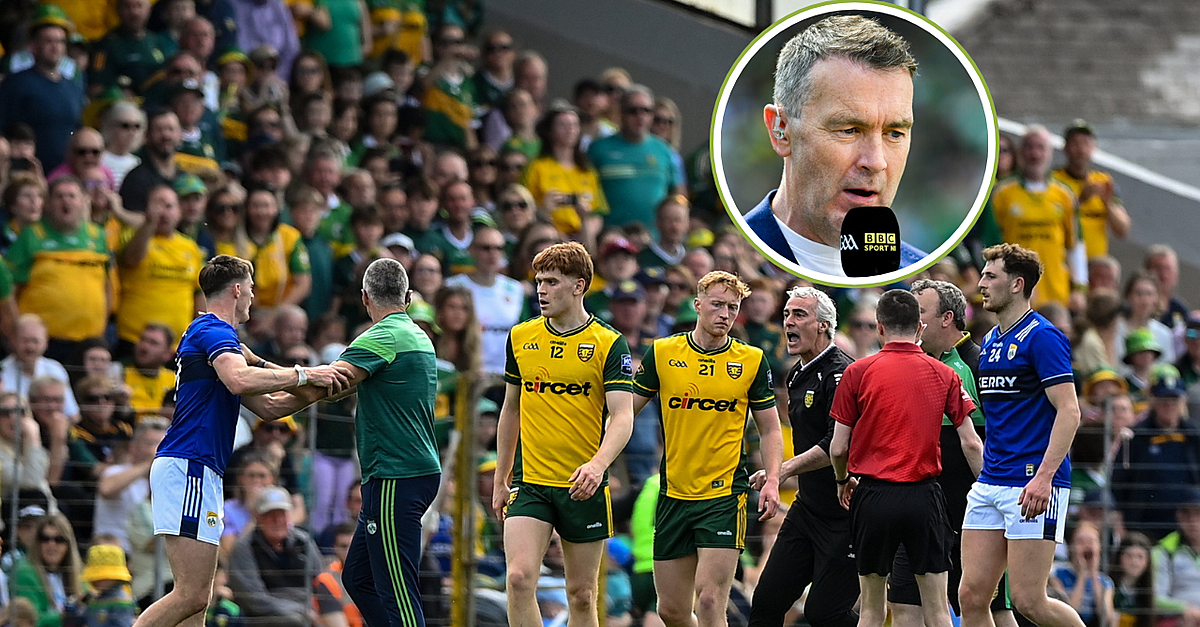
Kerry v Donegal gave GAA Ireland one of those messy, revealing moments that tells you more than the scoreboard ever could. The real story from Killarney was not just the flashpoint before half-time, but Oisín McConville’s blunt view that the chaos exposed a rule everyone knows and almost nobody properly enforces.
The former Armagh forward, speaking after the game, argued that referee Seán Hurson was right to clear the touchline and send people back where they belonged. His bigger point landed harder: it should not have taken a row in a major championship game for officials to apply a basic sideline directive.
GAA Ireland debate grows after Kerry-Donegal sideline disorder
Tempers spilled over late in the first half of Kerry’s All-Ireland series meeting with Donegal. By the time order returned, Micheál Burns had seen red before play restarted, and the referee had told both camps to reduce the number of people crowding the sideline.
That intervention sparked the real argument. McConville said lower divisions already apply the rule far more strictly, with only the manager allowed to stand on the line. In his experience with Wicklow, officials move coaches back into the dugout quickly. Yet in top inter-county football, he says the same standards often disappear.
It is a familiar complaint in Irish sports news: rules exist, then big occasions arrive and the boundaries soften. McConville’s description of Division 1 as almost a free-for-all hit home because anyone who watches enough GAA results and championship coverage has seen it. Packed technical areas, extra voices on the line, and too many bodies drifting into spaces where they can inflame a game rather than calm it.
The strongest part of his argument is that this is not about inventing another regulation. GAA Ireland already has the rule. The issue is consistency.
Why this matters beyond one match
McConville also pointed to an earlier GAA success: the effort to cut down on tunnel incidents around half-time. That problem looked difficult until officials decided to treat it seriously. His point was obvious enough:
- set the standard before throw-in
- apply it the same way in every division
- stop sideline numbers from swelling during tense moments
- take pressure off referees before disorder starts
That is the practical lesson from Kerry-Donegal. Not outrage, not grandstanding, just enforcement.
There is also a wider community sport angle here. The GAA usually sells itself on order, volunteer effort and local pride. Those values look thinner when elite matches allow one standard for the biggest counties and a stricter one for everyone else. From underage games to senior county finals, the message should be clear and visible.
For readers who bounce between Irish rugby, the League of Ireland, soccer Ireland coverage, athletics Ireland and women’s sport Ireland, this argument will sound familiar. The best competitions work when participants know exactly where the lines are and officials back themselves to hold them. That is as true in Irish football as it is in rugby Ireland or any match preview Ireland conversation about discipline under pressure.
What comes next matters more than the original flashpoint. If the GAA reviews the incident and quietly returns to old habits, nothing changes. If it treats Kerry-Donegal as a warning and enforces sideline rules properly, GAA Ireland might actually get a cleaner championship out of it. That would be a better outcome than any week of noise, debate and sports tips pretending the problem began and ended in Killarney.